
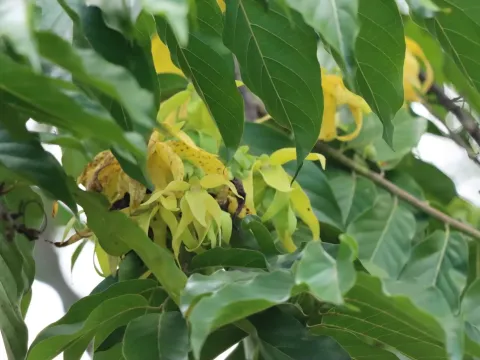
Ylang-ylang
Cananga
The propagation of Ylang-ylang (Cananga odorata) in agricultural practice is primarily achieved through seed propagation in specialized nurseries. Seeds should be sown in a well-draining, nutrient-rich substrate immediately after harvesting to ensure maximum germination rates, as they quickly lose viability.
What the section contains

Ylang-ylang
Seedlings are maintained in nursery conditions for a period of 6 to 12 months, until they reach a height of approximately 50 to 70 centimeters. Once established, they are transplanted to the field at the onset of the rainy season to ensure optimal root establishment and survival during the early growth phase.
A standard field layout typically employs a spacing of 5x5 or 6x6 meters, ensuring sufficient space for each tree's development. This spacing is crucial for managing canopy growth and facilitating future harvesting operations.
While cutting propagation is possible, seeds are often preferred for large plantations because they develop a stronger, deeper taproot system. This makes the tree significantly more resistant to the high winds common in tropical cultivation zones.
Young plants require consistent monitoring and shade in their early stages. Intensive exposure to direct sunlight is only advisable once the plant has developed a robust branch structure and a matured root system.
Ylang-ylang is a tropical evergreen tree belonging to the Annonaceae family, native to the tropical regions of Southeast Asia. To flourish, it requires a stable, humid tropical climate with temperatures consistently ranging between 20 and 30 degrees Celsius.
The selection of soil is critical: the tree prefers deep, fertile, and well-aerated soils with a neutral to slightly acidic pH. Waterlogging is detrimental to the plant, which is why sloping sites are often preferred to ensure natural drainage.
The crop thrives in regions with high annual rainfall, ideally exceeding 1500 to 2000 millimeters per year. However, plantation sites should ideally be sheltered from strong winds, as both the tree branches and the delicate flowers are highly susceptible to mechanical damage.
Agricultural management involves regular application of balanced mineral fertilizers, with a focus on nitrogen to support foliage production. Organic mulching is a highly recommended practice to retain soil moisture during seasonal dry spells.
Rigorous pruning is the cornerstone of Ylang-ylang agrotechnics. Trees are systematically pruned to maintain a manageable height of 2 to 3 meters, which allows workers to pick the flowers efficiently without damaging the tree structure.
The economic output of an Ylang-ylang plantation is measured by the weight of harvested blossoms. Trees typically begin to bloom between the third and fourth year, but full-scale commercial yields are generally reached after 7 to 10 years of growth.
A mature, well-maintained tree can produce between 10 and 20 kilograms of fresh flowers per year. Total yield is highly dependent on the genetic quality of the planting material and the intensity of care, particularly regarding canopy management.
The most productive lifespan of the tree is between 10 and 25 years. Following this period, yield levels typically begin to decline, signaling the need for rejuvenating pruning or total plantation replacement with new seedlings.
Harvesting is an exclusively manual process performed by experienced workers. The commercial value of the flowers is highest when they reach an intense yellow color, which marks the peak of essential oil accumulation within the petals.
To preserve essential oil quality, harvested flowers must be transported to the distillation facility immediately. Any delay in processing leads to the loss of volatile aromatic compounds and significantly lowers the value of the final oil product.
Common pests affecting Ylang-ylang include various species of scale insects and mealybugs. These sap-sucking pests weaken the plant by depriving it of essential nutrients and can lead to foliage deformation if not managed.
In high-humidity environments, fungal diseases such as anthracnose can become problematic, affecting both leaves and blossoms. Preventive measures include ensuring good airflow through the canopy by regular thinning and maintaining clean plantation hygiene.
Stem-boring beetles can cause significant damage by burrowing into the wood, leaving the tree susceptible to secondary infections. Regular inspection and the application of appropriate protective treatments are essential to prevent long-term damage.
Hygiene is paramount during pruning operations. Tools should be disinfected between trees to prevent the spread of pathogens, and pruning wounds should be treated to prevent fungal ingress.
- Scale insects (coccids) targeting young shoots.
- Mealybugs causing stunted growth.
- Anthracnose fungal infections affecting flowers.
- Root rot due to poor soil drainage.
Harvesting Ylang-ylang is a specialized, labor-intensive process performed early in the morning. This timing is essential because the concentration of volatile essential oils in the petals reaches its peak before the heat of the day.
Workers carefully pick each flower by hand, ensuring that petals are not bruised or torn. Mechanical damage to the petals triggers oxidation processes that degrade the aromatic profile of the essential oil extracted during distillation.
Logistics must be streamlined to ensure that the time between harvesting and the beginning of the steam distillation process is as short as possible, typically within 12 to 24 hours.
Harvesters must be skilled in identifying the exact stage of maturity for the flowers. Picking too early or too late results in an oil with an inferior aromatic profile, failing to meet high-grade perfumery standards.
The tree exhibits a long flowering period, which can span several months. This requires a stable labor force throughout the season to ensure that flowers are picked as they reach peak maturity to maximize total plantation output.