
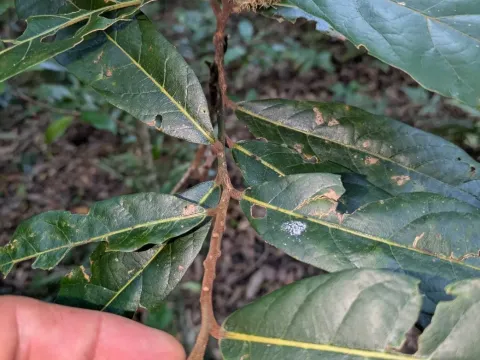
Cryptocarya obovata
Cryptocarya obovata
Propagation of Cryptocarya obovata is primarily achieved through seeds, which must be collected as soon as the fruit ripens. It is essential to remove the pulp immediately to prevent fungal contamination during storage.
What the section contains
Cryptocarya obovata
Sowing should be performed in a well-draining, nutrient-rich potting medium. The seeds require consistent warmth and moisture, typically germinating within several weeks under optimal conditions.
Seedlings should be kept in partial shade during their first season to mimic the natural forest floor conditions. Regular monitoring for moisture is critical, as the roots are delicate.
Transplanting to the permanent site is recommended once the seedling has hardened off and reached a height of at least 40 centimeters. Care should be taken to minimize root disturbance during this process.
The establishment phase requires diligent weeding around the base of the plant to reduce competition for nutrients and water, which is crucial for early growth acceleration.
Cryptocarya obovata, commonly known as white walnut, is a large, evergreen tree belonging to the Lauraceae family. It is native to the subtropical and tropical rainforests of eastern Australia.
The tree thrives in deep, fertile soils that provide excellent moisture retention without becoming waterlogged. It has a high demand for humidity and performs best in sheltered, low-wind environments.
While seedlings require shade, mature trees eventually become part of the canopy, where they exhibit rapid growth and high biomass production under sufficient light exposure.
Temperature stability is vital for this species, as it is sensitive to frost and extreme cold. It requires a climate that provides consistent rainfall throughout the year.
In terms of forest management, maintaining soil fertility through organic mulching is highly recommended to support the tree’s nutritional needs and ecosystem health.
The primary economic output of Cryptocarya obovata is its high-quality timber. The wood is light-colored, fine-grained, and durable, making it valuable for joinery and cabinet making.
Yield is measured in terms of log volume and timber grade. Mature trees reach significant dimensions, often providing high-quality lumber suitable for specialty woodworking markets.
Sustainable harvesting practices are essential, as the species is an important component of the local biodiversity and provides habitat for various rainforest wildlife.
The growth rate can be substantial under ideal conditions, making it a viable candidate for sustainable forestry projects in suitable subtropical regions.
Strategic thinning of plantations helps optimize the final wood quality by encouraging straight trunk development and reducing competition among mature trees.
Root rot, often caused by poor drainage or excessive soil moisture, is one of the most significant threats to the health of Cryptocarya obovata plantations.
Various insect pests, including leaf-eating caterpillars and boring beetles, can compromise the foliage and the structural integrity of the timber if left unmanaged.
Fungal pathogens can affect the bark and woody tissues, especially if the trees have been subjected to mechanical damage during maintenance or clearing operations.
Weed infestation is a primary concern during the establishment phase, as invasive species can quickly overwhelm young trees, hindering their vertical development.
Climatic hazards, particularly severe storms and cyclones common in its native range, pose a risk of windthrow and mechanical damage to the canopy of older trees.