
Cryptocarya woodii
Cryptocarya woodii
Description
Growing requirements
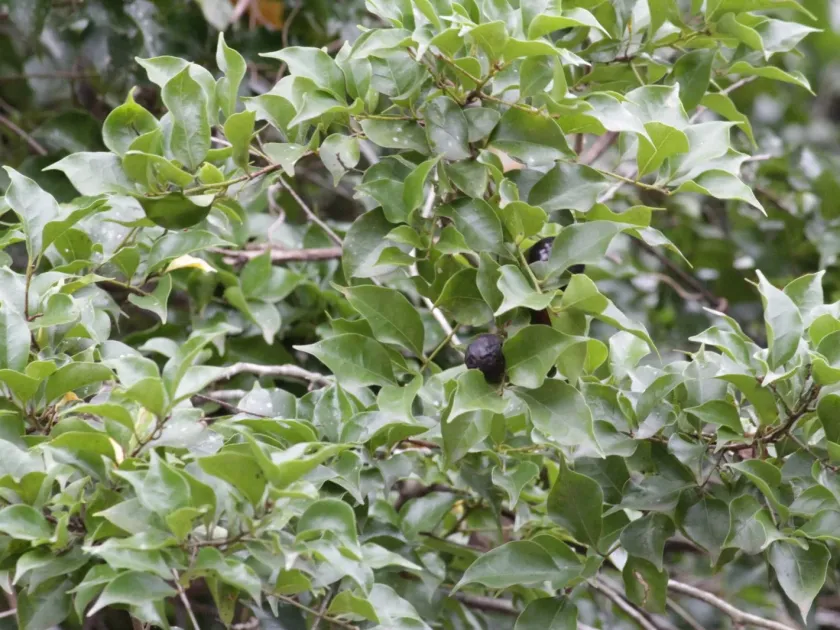
Cryptocarya woodii, commonly known as the Cape quince, is a member of the Lauraceae family. This evergreen tree is native to the coastal regions of South Africa, typically inhabiting bushveld and forest margins.
The species thrives in warm, temperate to subtropical climates. It is best suited for environments with consistent moisture, requiring well-draining, nutrient-rich soils to support its steady growth and deep root architecture.
Botanically, it is characterized by its glossy, dark-green leaves and inconspicuous, small, pale yellow-green flowers. The tree produces small, round fruits that are important for local fauna, reflecting its ecological value.
Regarding cultivation, this tree requires bright, filtered sunlight during its early stages to avoid foliage scorch. Once established, it can tolerate more exposure, though it performs best in sheltered locations.
Agricultural management should prioritize a consistent watering schedule and the application of organic mulch. Proper soil management helps maintain the pH levels suitable for this plant species, ideally between 6.0 and 7.0.
Main diseases and pests
Root pathogens represent a significant threat to Cryptocarya woodii, especially in poorly drained clay soils where hypoxia can easily occur. Proper drainage design is essential for disease prevention.
Scale insects and spider mites are the most frequent pests observed in nursery environments. These pests compromise plant vigor by depleting vital sap resources from new shoots and leaf undersides.
Fungal leaf spot diseases may appear during periods of high humidity. Improving airflow around the canopy and ensuring the area under the tree is cleared of debris are standard preventive measures.
Integrated pest management (IPM) strategies, including biological control agents, are recommended over broad-spectrum pesticides to preserve the local ecological balance of the plantations.
Monitoring for signs of nutrient deficiency or water stress is critical, as weakened trees are significantly more susceptible to opportunistic secondary infections and infestations.