
Gordlinia grandiflora
Gordlinia grandiflora
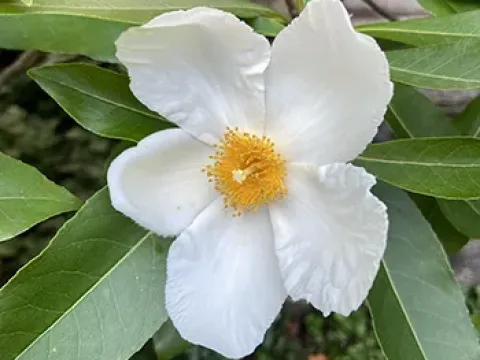
Gordlinia grandiflora is a remarkable intergeneric hybrid created by crossing Franklinia alatamaha and Gordonia lasianthus. It belongs to the Theaceae family and serves as a standout ornamental tree valued for its significant, camellia-like white flowers that bloom throughout the summer.
What the section contains
Gordlinia grandiflora
Botanically, it functions as a semi-evergreen tree that can reach a height of up to 40 feet in optimal conditions. The foliage is thick and dark green, providing a lush aesthetic backdrop for the large, bowl-shaped flowers that feature prominent yellow stamens.
To ensure healthy growth, the tree requires acidic, well-draining soil rich in organic matter. While it thrives in locations with high humidity, it is vital to avoid standing water, as the roots are highly susceptible to rot if oxygen supply is compromised by saturated soil conditions.
Exposure to full sun with light afternoon shade is recommended to maximize flowering potential while protecting the leaves from scorching. In regions with fluctuating winter temperatures, providing a thick layer of organic mulch around the base is essential to insulate the root system from freezing cycles.
Cultivation success depends on maintaining consistent moisture levels during the establishment phase. As a relatively low-maintenance hybrid, it is increasingly popular in landscape design for its ability to provide structural elegance and extended seasonal interest compared to its parent species.
The primary horticultural challenge for Gordlinia grandiflora is its sensitivity to fungal pathogens, particularly Phytophthora species. This often results from poor drainage or planting in areas prone to periodic flooding, necessitating careful site selection and soil amendment prior to planting.
Pests such as scale insects and aphids may occasionally infest new growth, especially during periods of stress. Management strategies should prioritize biological controls and horticultural oils, applying these treatments during the early stages of infestation to prevent significant damage to the tree's health.