
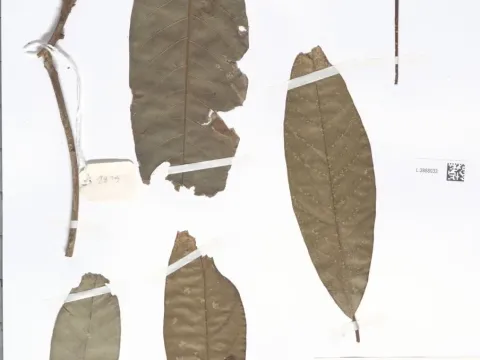
Cryptocarya nitens
Cryptocarya nitens
Cryptocarya nitens belongs to the Lauraceae family, a group of trees and shrubs well-known in tropical ecosystems. This species is an evergreen tree characterized by its glossy foliage and robust structural growth.
What the section contains
Cryptocarya nitens
The plant thrives in humid tropical climates, requiring consistent precipitation and warm temperatures throughout the year. It performs best in deep, well-drained soils rich in nutrients, which are essential for its vigorous growth.
From a botanical standpoint, this species often occupies the canopy layer, making it moderately shade-tolerant during its juvenile stages. However, as it reaches maturity, increased light availability enhances its photosynthetic potential.
Agrotechnical practices involve careful site selection that avoids waterlogged areas, as stagnant water poses a risk to the tree's health. Soil preparation should focus on optimizing aeration and maintaining high organic matter content.
Successful cultivation requires regular monitoring of moisture levels, especially in commercial nurseries. Providing adequate space between trees is vital to ensure proper crown development and prevent competition for resources.
The primary economic use of Cryptocarya nitens is in the timber industry. Its wood is valued for its density and workability, making it a desirable material for cabinetry, indoor furniture, and specialized joinery.
Yield estimations are based on long-term forestry cycles, where consistent growth rates contribute to the volume of wood harvested per hectare. Industrial plantations utilize these trees to supply high-quality raw materials.
The tree also holds interest for pharmaceutical research due to the diverse secondary metabolites found in its bark and leaves. These compounds are studied for their potential utility in developing therapeutic agents.
Maximizing the harvest value requires sustainable management practices, including selective harvesting and the promotion of biodiversity within forest areas to maintain soil health for future planting cycles.
Economic returns are optimized when the wood is harvested at the peak of its structural maturity. Proper processing and seasoning techniques ensure the wood maintains its physical properties for market applications.
The culture faces several biological risks, with fungal root rot being the most significant in areas with poor drainage. Pathogens can quickly compromise the root system, leading to rapid decline if not managed.
Pests such as wood-boring beetles present a danger to the stem and bark of the tree. These insects can damage the wood structure, significantly reducing the marketability of the timber harvested from affected plantations.
Foliar pathogens, including leaf spot diseases, are common in high-humidity environments. These infections reduce the tree's overall vigor and are often exacerbated by poor air circulation within the plantation.
Integrated pest management (IPM) strategies, including biological controls and selective thinning, are essential to minimize the need for chemical interventions. Maintaining healthy, spaced plantations is the first line of defense.
Sanitation practices, such as the prompt removal and disposal of diseased plant material, are crucial to preventing outbreaks. Regular field assessments allow for the early detection and mitigation of potential threats.