
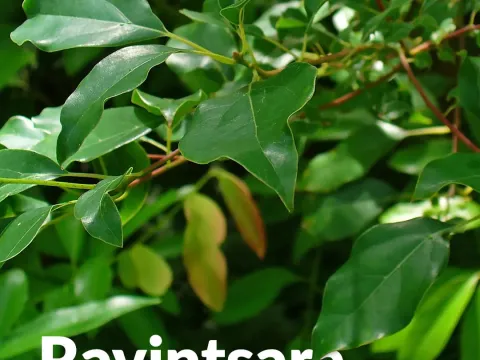
Cryptocarya agathophylla
Cryptocarya agathophylla
Cryptocarya agathophylla, a member of the Lauraceae family, is an evergreen tree native to the rainforests of Madagascar. It is globally recognized as the source of ravintsara oil, highly prized for its medicinal and aromatic properties.
What the section contains
Cryptocarya agathophylla
This species thrives in a tropical climate characterized by high humidity and consistent warmth. It requires deep, well-drained, and nutrient-rich soils to support its vigorous root system and dense evergreen foliage throughout the year.
Cultivation practices necessitate controlled light exposure for young saplings. While mature trees can tolerate more sun, early development is significantly better in shaded nursery conditions, mimicking the forest understory environment.
Water management is critical for this crop. Frequent but controlled irrigation is essential to keep the soil moist without creating anaerobic conditions, which could lead to root pathogens prevalent in tropical agricultural zones.
The plant demonstrates a strong preference for environments that do not experience significant temperature drops. Agronomic efforts are typically focused on maintaining soil fertility through organic mulching to preserve the moisture and nutrient content.
The harvesting of leaves is conducted by hand to ensure the selection of only the most aromatic, healthy foliage. Harvesters typically prioritize younger leaves, where the concentration of cineole and other terpenes is at its maximum.
Post-harvest handling involves drying the leaves in specialized shaded facilities. This process must be carefully monitored to avoid oxidation, which can compromise the quality and yield of the essential oil during the subsequent distillation process.
Quality control is a paramount aspect of the harvest cycle. Each batch of leaves is inspected for foreign debris and signs of fungal infections, ensuring that the final extract meets international standards for pharmaceutical and cosmetic use.
Industrial production relies on steam distillation. The efficiency of this process is highly dependent on the freshness of the leaves, meaning that the logistics between the plantation and the processing facility must be optimized for speed.
Sustainable harvesting practices include pruning the trees rather than stripping them entirely. This ensures the long-term health of the plantation and allows for multiple harvests per year, maximizing the economic output per hectare.