
Cinnamomum porrectum
Cinnamomum porrectum
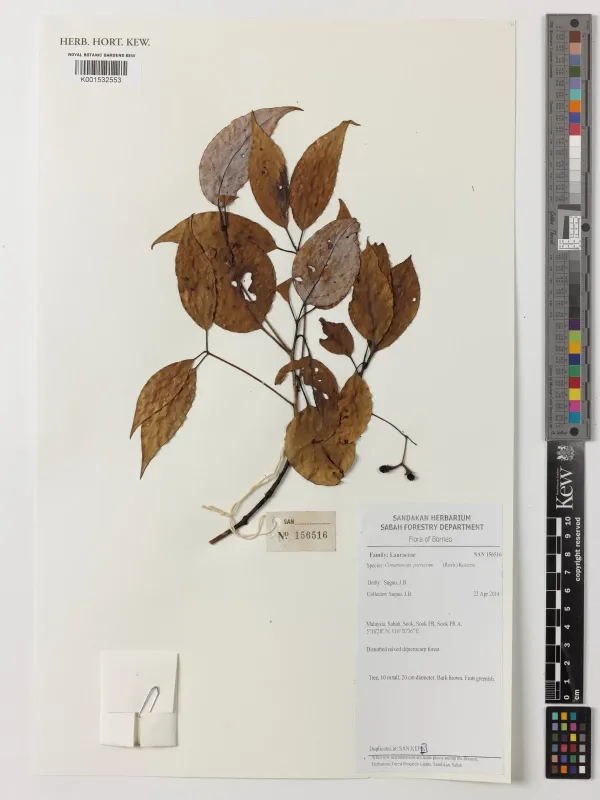
Description
Growing requirements
Cinnamomum porrectum is an evergreen tree belonging to the Lauraceae family. In its natural environment, it reaches significant sizes and develops a dense canopy, typical of the subtropical forests of Southeast Asia.
The culture requires a warm and humid tropical or subtropical climate for optimal development. The tree is highly sensitive to frost, which limits its range to regions with mild winters and stable temperatures without sharp fluctuations.
The plant prefers deep, well-drained, and fertile soils with a high organic matter content. Slightly acidic to neutral substrates rich in humus are considered the most favorable for its growth.
In forestry practice, the culture must be provided with an adequate level of light, although partial shading is permitted during the juvenile stage to protect seedlings from harsh, direct sunlight.
Maintaining high air humidity is a crucial factor for successful introduction, as it stimulates the active synthesis of secondary metabolites in the tree tissues, including valuable essential oils.
Yield
The economic use of this species is focused on the production of aromatic wood, which is highly valued in carpentry for its natural resistance to pests and its pleasant, lasting scent.
Another significant commercial asset is the essential oil, extracted from leaves and bark via steam distillation. Oil yield varies depending on the tree age and specific growing conditions.
The wood of this species is utilized in the manufacture of luxury furniture, interior design elements, and specialized aromatic products, ensuring a steady market demand.
Leaf biomass can be processed to extract terpenoids, which are widely applied in the pharmaceutical and fragrance industries as natural flavoring and scent agents.
Commercial cultivation requires a long growth cycle, as achieving harvestable timber standards typically spans several decades of active growth within plantation settings.
Main diseases and pests
Fungal infections of the root system pose the greatest threat to young seedlings, often triggered by excessive moisture accumulation in the soil profile.
The foliage can be attacked by various insect pests, including leaf rollers and sap-sucking insects, which reduce overall tree productivity and affect the quality of the essential oils.
Plantations often experience micronutrient deficiencies, leading to leaf chlorosis and stunted growth, which requires proactive and timely nutrient management.
Human pressure and the degradation of natural habitats contribute to population decline, necessitating responsible forest management and conservation efforts.
- Root rot due to waterlogging
- Pest insect infestations
- Nutrient-related leaf chlorosis
- Competition from invasive weeds in nurseries