
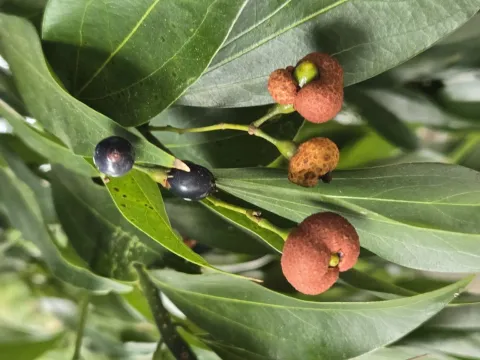
Cinnamon
Cinnamomum
Cinnamon is primarily propagated in commercial settings using seeds or vegetative methods, specifically cuttings. Seeds must be sown in prepared nurseries shortly after harvesting because they lose viability quickly upon drying.
What the section contains


Cinnamon
The germination process requires high humidity and stable soil temperatures, typically maintained within shaded greenhouses. Seeds are sown in rows, ensuring a planting density that allows seedlings to develop without competition during their first year.
Vegetative propagation via cuttings preserves the specific cultivar traits of the parent plant, which is crucial for high-quality bark production. Cuttings are taken from young shoots and treated with rooting hormones to enhance success rates.
Seedlings are transplanted to their permanent locations at the beginning of the rainy season to provide the optimal moisture levels required for root system establishment. Planting is performed in pre-prepared pits enriched with organic fertilizer.
Spacing depends on the specific species of Cinnamomum and production goals, but a standard planting distance is 2 to 3 meters between trees, which allows for proper air circulation and canopy development.
Cinnamon belongs to the Lauraceae family and is an evergreen tree or shrub. Naturally, the plant prefers tropical climates characterized by consistent rainfall distribution throughout the year.
Air temperature is critical for successful cultivation and should not drop below 15–20 degrees Celsius. The plant is extremely sensitive to frost and sudden temperature fluctuations, which restricts its cultivation to equatorial regions.
Soil requirements include deep, loose, well-draining textures with a high organic matter content. Sandy loams or light loamy soils with a near-neutral pH are considered optimal for growth.
While sunlight is vital for the development of essential oils in the bark, young plants require partial shade to protect them from excessive heat and leaf scorch. Mature trees are more resilient and tolerate direct sunlight better.
Maintaining proper drainage is a key requirement, as the root system is prone to rot in waterlogged conditions. Regular moisture monitoring is essential during dry seasons to ensure tree health.
The primary agricultural objective of cinnamon production is harvesting the aromatic bark, which contains valuable essential oils. Yield directly depends on the age of the trees and intensive pruning practices.
Initial commercial bark harvesting typically begins when trees reach 3 to 5 years of age. At this stage, the plant is often subjected to severe pruning or coppicing, which stimulates the growth of numerous straight, thin shoots.
The quality of the final spice product depends on the thickness of the harvested bark and the precision with which the outer, rougher cork layer is removed. Inner bark layers provide the best aromatic properties and command higher market prices.
Plantation productivity is maintained through regular mineral fertilization and irrigation management. Efficient resource management allows a single tree to remain productive for 15 to 20 years.
In addition to bark, cinnamon leaves are agriculturally significant, as they are used to distill essential oils for the fragrance and food industries.
Cinnamon is susceptible to various fungal diseases, such as leaf rust and root rot, which often occur due to poor moisture management and inadequate soil aeration.
Pests pose a significant threat, particularly leaf-eating insects and caterpillars that can drastically reduce the photosynthetic leaf area, thereby stunting tree growth.
Sucking pests, including scale insects and thrips, can colonize young shoots, depleting the plant's vitality and potentially transmitting viral infections. Continuous monitoring of pest populations is a mandatory part of plantation management.
Disease control involves the use of preventive fungicides and sanitary pruning of damaged or infected branches. The efficacy of protection measures is highly dependent on the early detection of infection outbreaks.
Agronomic best practices, such as maintaining optimal planting density and timely weeding, are essential for minimizing the risks of large-scale disease outbreaks and pest infestations.
Harvesting cinnamon is a labor-intensive process requiring skilled manual labor. Bark harvesting is performed exclusively during the rainy season when high humidity facilitates the clean separation of the bark from the wood.
Harvested shoots are stripped of their outer layers, and the inner bast layer is carefully removed using specialized knives. Precision is required to ensure no wood debris remains, preserving the purity and aroma of the final product.
After removal, the bark strips are left to dry slowly under shaded, ventilated conditions. As they dry, the strips naturally curl into tight quills, which is the standard commercial form of the spice.
To ensure high quality, the drying process must occur in well-ventilated areas to prevent mold and the loss of volatile essential oils. Once dried, the quills are sorted by size and visual quality.
Final product storage and transportation are handled using airtight packaging to protect the quills from moisture and cross-contamination by external odors that could compromise the unique flavor profile.