
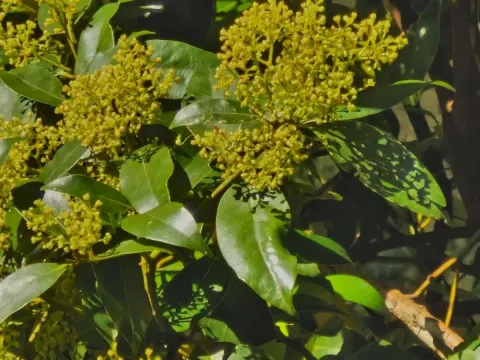
Cryptocarya glaucescens
Cryptocarya glaucescens
Cryptocarya glaucescens, commonly known as Jackwood, belongs to the Lauraceae family. This evergreen tree is a characteristic species of the subtropical and tropical rainforests.
What the section contains
Cryptocarya glaucescens
Propagation is primarily achieved through seeds, which should be sown fresh as they lose viability rapidly. Successful germination requires a warm, humid environment with consistent moisture levels.
Nursery seedlings are slow-growing and require partial shade to prevent desiccation. Providing a well-aerated, organic-rich potting medium is crucial during the early stages of development.
Field planting is most effective at the beginning of the rainy season to allow the root system to establish before the onset of drier conditions.
Spacing recommendations vary based on the specific forestry project objectives, but maintaining adequate room for canopy development is essential for long-term tree health.
This species thrives in deep, fertile, and well-drained soils. It exhibits sensitivity to waterlogged conditions, which can lead to root system decay and poor development.
Cryptocarya glaucescens requires a high-humidity environment and stable precipitation patterns. It is not suitable for regions characterized by prolonged, severe droughts.
The optimal temperature range is between 18 and 28 degrees Celsius. The tree is frost-tender and requires protection from extreme cold temperatures to survive.
As a shade-tolerant species, it is often found in the understory of primary forests, making it an excellent candidate for enrichment planting in degraded forest areas.
Regular mulching and soil nutrient management are beneficial for maximizing growth rates, especially in younger plantations where resource competition is high.
The primary economic value of Cryptocarya glaucescens lies in its timber. The wood is prized for its attractive grain, workability, and durability in various indoor applications.
Commercial maturity is reached over several decades, requiring long-term planning and management of forest stands to ensure quality production.
Beyond timber, the species contributes significantly to ecosystem services, providing habitat and food resources for various avian and mammalian species in its range.
Yield estimates depend heavily on site quality and the implementation of proper silvicultural practices, such as selective thinning and protection from damage.
The foliage and bark contain volatile oils, which are subjects of research for potential medicinal or industrial uses, further enhancing the tree's versatility.
Root rot, particularly caused by Phytophthora species in poorly drained soils, remains one of the most significant threats to young plantations.
Various defoliating insects can pose a challenge during the seedling stage, requiring integrated pest management strategies to minimize damage.
Invasive weed species can rapidly overtake young stands, competing for vital resources like light and water, and must be controlled to prevent growth suppression.
Damage to the trunk or branches during forest management activities can invite wood-boring pests and fungal infections that compromise structural integrity.
Climate change and forest fragmentation represent long-term threats to the genetic diversity and natural regeneration capacity of the population in the wild.