
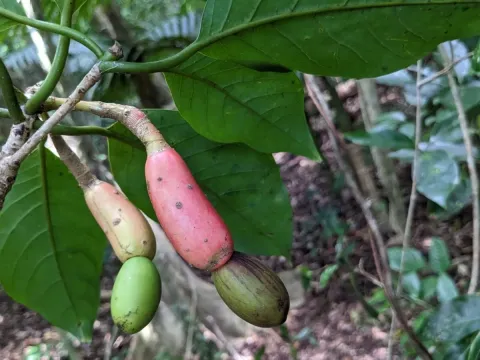
Dehaasia
Dehaasia
Dehaasia is a genus of tropical evergreen trees, and as such, it does not follow traditional agricultural sowing schedules common to field crops. Propagation is primarily achieved through seeds, which must be sown immediately after maturation to maintain viability.
What the section contains


Dehaasia
In nursery conditions, seeds are planted in a loose, well-draining medium. Maintaining high humidity and a consistent temperature of approximately 25 degrees Celsius is essential for successful germination.
The seeds are typically planted at a shallow depth, roughly equivalent to their size, to allow for optimal oxygen exposure. Proper moisture management is critical, as excessive water can lead to fungal issues in the developing seedlings.
Transplanting into the field is ideally performed at the beginning of the rainy season to facilitate root establishment. Young trees often benefit from partial shade during their first year of growth to avoid leaf desiccation.
The duration from seedling stage to a size suitable for permanent field planting typically ranges from six to twelve months depending on the growing environment and care.
As a member of the Lauraceae family, Dehaasia requires a specific tropical climate characterized by year-round high humidity and abundant rainfall. It is not cold-hardy and cannot survive frost.
The ideal soil profile for this culture consists of a deep, nutrient-rich humus layer. Well-drained loam soils with a neutral to slightly acidic pH are preferred to ensure root health and development.
This tree thrives in stable environments where temperature fluctuations are minimal. Extreme heat combined with low humidity can lead to physiological stress and reduced growth rates.
Good air circulation around the canopy is necessary to mitigate the risk of epiphytic infestations and fungal pathogens. Regular organic fertilization during active growth cycles supports structural development.
Weed control is of utmost importance during the establishment phase, as Dehaasia exhibits slow initial growth and is easily outcompeted by aggressive tropical vegetation.
The primary economic value of Dehaasia lies in its timber, which is appreciated for its durability and structural integrity. Yield is typically measured by the volume of merchantable wood per hectare.
The rotation period for harvesting timber is long-term, often spanning several decades. Pruning and selective thinning are essential silvicultural practices to ensure the production of high-quality, knot-free wood.
Research into the secondary metabolites of Dehaasia species suggests potential in pharmaceutical applications due to the presence of specific alkaloids in the bark and leaves.
Sustainable plantation management, involving careful site selection and density control, can significantly improve productivity compared to wild-harvested stands.
The commercial output depends heavily on global market demand for tropical hardwoods and the ability to maintain a consistent supply chain of high-quality raw materials.
Dehaasia is vulnerable to several tropical pests, particularly wood-boring insects that can damage the trunk and lower the value of the timber. Monitoring these populations is vital for plantation health.
Root rot pathogens represent a significant risk, especially in poorly drained soil conditions. Implementing rigorous drainage and sanitation measures is necessary to prevent mass infection.
Defoliating insects can occasionally cause significant leaf loss, impacting the photosynthetic capacity of the tree. Integrated pest management strategies are often utilized to protect young plantations.
Epiphytes and climbing vines can physically suppress young Dehaasia trees, competing for light and nutrients. Regular manual clearing of the canopy is a standard requirement in tropical forestry.
Resistance to local pathogens varies significantly between species within the genus, making genetic selection an important factor in the success of any cultivation project.
Harvesting involves the selective logging of mature trees that have reached the required diameter for industrial use. This practice supports sustainable forestry by allowing surrounding trees to continue maturing.
Proper logistical planning is required for the transport of timber from remote tropical locations to processing facilities to prevent moisture-related damage and fungal decay.
Seed collection for reforestation is performed manually from selected healthy individuals. The seeds undergo immediate processing to remove the flesh of the fruit, ensuring they are ready for propagation.
Post-harvest treatment includes systematic drying of the timber to prevent warping, cracking, or shrinkage. Proper seasoning is essential to maximize the commercial value of the final product.
Sustainable harvesting protocols are central to the cultivation of Dehaasia, ensuring that the ecological balance of the plantation area is maintained for future generations.