
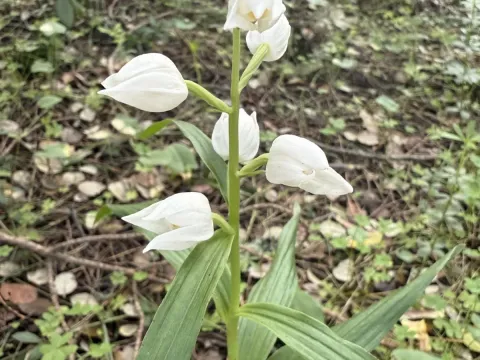
Cephalanthera
Cephalanthera
Cephalanthera is a genus belonging to the Orchidaceae family. It is important to note that these plants are not considered agricultural crops; they are wild forest species that cannot be commercially farmed due to their highly specialized life cycles.
What the section contains
 Caucasian white helleborine
Cephalanthera caucasica
Caucasian white helleborine
Cephalanthera caucasica
 Cephalanthera cucullata
Cephalanthera cucullata
Cephalanthera cucullata
 Cephalanthera erecta
Cephalanthera erecta
Cephalanthera erecta
 Cephalanthera falcata
Cephalanthera falcata
Cephalanthera falcata
 Cephalanthera kotschyana
Cephalanthera kotschyana
Cephalanthera kotschyana
 Cephalanthera longibracteata
Cephalanthera longibracteata
Cephalanthera longibracteata
 Kurdish helleborine
Cephalanthera kurdica
Kurdish helleborine
Cephalanthera kurdica
 Large-flowered Helleborine
Cephalanthera epipactoides
Large-flowered Helleborine
Cephalanthera epipactoides
 Phantom Orchid
Cephalanthera austiniae
Phantom Orchid
Cephalanthera austiniae
 Red helleborine
Cephalanthera rubra
Red helleborine
Cephalanthera rubra
 Sword-leaved Helleborine
Cephalanthera longifolia
Sword-leaved Helleborine
Cephalanthera longifolia
 White helleborine
Cephalanthera damasonium
White helleborine
Cephalanthera damasonium
Cephalanthera
These plants are characterized by their rhizomatous growth habit and their extreme dependence on soil fungi, a relationship known as mycorrhiza. Without these specific fungi, the plant cannot germinate or thrive, making standard agronomic practices ineffective.
The native range of Cephalanthera spans the temperate regions of Europe, Asia, and North America. They thrive in shaded woodland environments, preferring soil types that are rich in humus and possess a neutral to slightly alkaline pH level.
Ecologically, these plants are considered sensitive indicators of forest health. They require a stable microclimate, and the removal of canopy cover or soil disruption typically results in the immediate decline of the local population.
There is no economic or agricultural utilization for this genus. The primary objective regarding these plants is the preservation of biodiversity, as many species within the genus are legally protected due to their vulnerability.
The main threats to Cephalanthera populations include deforestation, land development, and changes to forest hydrology. These anthropogenic activities destroy the underground fungal networks essential for the survival of the orchids.
Herbivory by gastropods, such as snails and slugs, poses a significant risk to the foliage and flowering stems. Additionally, fungal pathogens can affect the plants if the drainage is poor or the humidity remains excessively high.