
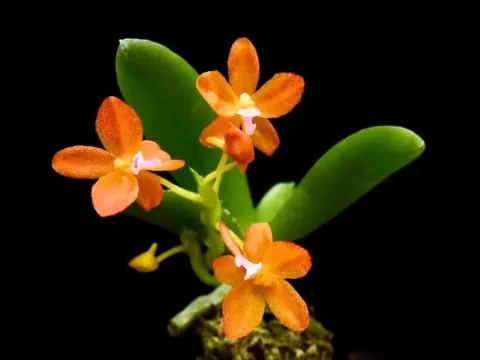
Ceratocentron
Ceratocentron
Ceratocentron is a monotypic genus of epiphytic orchids belonging to the Orchidaceae family. In the wild, the only known species, Ceratocentron fesselii, is found exclusively in the Philippines, where it grows on tree trunks within humid tropical forest ecosystems.
What the section contains

Ceratocentron
The plant features a compact stem and fleshy leaves designed for moisture storage. A defining characteristic is its bright orange or yellow flowers, which possess a distinct spur and bloom on short spikes, making it a highly prized specimen for orchid enthusiasts and collectors.
To successfully cultivate Ceratocentron, growers must simulate its natural tropical habitat. Temperatures should ideally range between 20 and 26 degrees Celsius, with a necessary diurnal temperature fluctuation to trigger the flowering cycle effectively.
High relative humidity is the most critical factor for survival, ideally maintained between 70% and 80%. In home or greenhouse settings, the use of ultrasonic humidifiers or enclosed orchidariums with proper ventilation is highly recommended for optimal results.
The potting medium must be highly porous; mounting on pine bark or using hanging baskets with minimal sphagnum moss is preferred. It is essential that the roots dry out quickly after irrigation to prevent the onset of rot, which is a major risk for this epiphytic species.
The primary threats to this genus are fungal and bacterial rots, often triggered by excessive moisture in the substrate or stagnant air. These infections can spread rapidly through the fleshy tissues, potentially causing the plant to deteriorate within a short period.
Common pests that plague these orchids include spider mites and mealybugs. These insects feed on the sap of the plant, significantly weakening its immune system and creating entry points for secondary infections or pathogens.
Regular monitoring of leaf axils and the undersides of leaves is essential for early pest detection. If infestations occur, growers should apply specific insecticides or acaricides, ensuring they do not apply harsh chemicals directly to the sensitive flower buds.
Preventative measures include maintaining strict tool hygiene and ensuring proper air circulation around the plants. Avoiding direct sunlight is also vital, as the thin leaves are susceptible to severe photo-damage and dehydration.
Using low-mineral or distilled water for irrigation helps prevent salt buildup in the root zone, which can inhibit growth. Consistent and attentive care is the best strategy to maintain the health and vigor of this rare orchid.