
Sword-leaved Helleborine
Cephalanthera longifolia
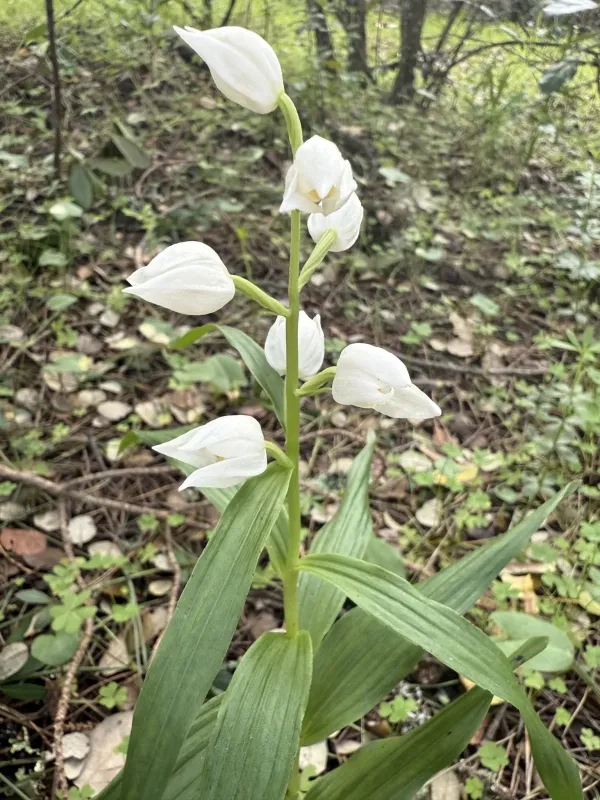
Description
Growing requirements
The Sword-leaved Helleborine (Cephalanthera longifolia) is a perennial herbaceous plant belonging to the Orchidaceae family. It is a highly specialized plant that relies on a symbiotic relationship with specific soil fungi to thrive in its natural habitat.
The species is distributed across Europe, parts of Asia, and North Africa. It typically inhabits deciduous and mixed forests, preferring calcareous soils and light, semi-shaded environments where the leaf litter provides necessary nutrients and moisture.
Botanically, it is recognized by its slender, sword-shaped leaves arranged in two ranks along the stem. The flowers are pure white and form a loose, elegant spike, blooming throughout the spring and early summer period.
The plant has strict environmental requirements, including stable soil moisture and specific fungal associations. Because it is not an agricultural crop, it is not cultivated for commercial purposes but is often studied by botanists for its complex biology.
Conservation efforts are paramount, as the species is sensitive to environmental changes. In gardens, it is extremely difficult to maintain without replicating its precise natural woodland soil conditions and fungal ecosystem.
Main diseases and pests
Habitat loss due to deforestation and land development remains the most significant threat to the Sword-leaved Helleborine. Any disturbance to the soil structure disrupts the critical mycorrhizal networks the plant requires to survive.
Pests that may impact the plant include slugs and snails, which can cause significant damage to the leaves during the early growth stages. Insect infestations are less common but can occur in crowded or unhealthy environments.
Diseases are generally associated with root rot caused by poor soil drainage or the failure of the symbiotic fungi. In the wild, the plant maintains a natural resistance, but it becomes vulnerable when relocated or stressed.
Sustainable land management, such as maintaining forest canopy cover and avoiding soil compaction, is essential for protecting the species. Protecting the delicate balance of the forest floor is the primary method of ensuring the health of the population.
Collectors and enthusiasts are strongly advised against digging up wild specimens. Not only is it often illegal to harvest such protected species, but the plants almost inevitably die when moved from their specific forest ecosystem.