
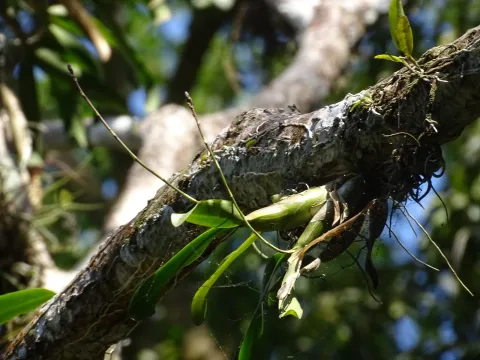
Caularthron
Caularthron
Caularthron is a genus of epiphytic orchids belonging to the Orchidaceae family, native to the tropical regions of Central and South America. These plants are uniquely adapted to grow on trees, extracting moisture and nutrients from the air and rain through their specialized root systems.
What the section contains

Caularthron
Cultivation requires maintaining a high humidity level, ideally ranging from 70% to 80%, to mimic their natural habitat. Proper lighting is essential; these orchids thrive under bright, indirect light, which promotes healthy pseudobulb formation and ensures robust flowering cycles.
The substrate must be highly porous, consisting primarily of fir bark, charcoal, and perlite or coconut fiber. Standard potting soil is strictly avoided, as it causes rapid root rot due to the lack of oxygen circulation and poor drainage within the pot.
Temperature control is a vital aspect of Caularthron management, requiring daytime temperatures between 20°C and 28°C. A distinct drop in temperature at night is necessary to trigger metabolic processes and ensure that the plant has enough energy to develop its inflorescences.
Irrigation practices should be focused on wetting the substrate thoroughly and allowing it to dry out almost completely between waterings. Using filtered or distilled water prevents salt accumulation, which can damage the delicate root tips of the orchid over time.
Mealybugs and scale insects represent the most common pest threats to Caularthron. These pests thrive in protected greenhouse environments, hiding in the leaf axils and pseudobulb sheaths where they feed on sap, often leading to stunted growth or total plant decline.
Fungal infections, often manifesting as black spot or root rot, are typically the result of poor air circulation or stagnant water. Implementing a fan for consistent air movement is a primary preventative measure to ensure the health of the root system and foliage.
Spider mites can become an issue when the ambient humidity drops below optimal levels. Regular monitoring of the underside of the leaves is crucial, as early detection allows for effective mechanical removal or the application of organic acaricides.
Bacterial rot is a particularly aggressive threat that can spread quickly through pseudobulbs if water remains trapped after irrigation. Ensuring that the plant dries out rapidly after any moisture application is the best strategy for long-term health.
Viral infections are irreversible and often spread through contaminated cutting tools during repotting or pruning. Strict sterilization of all tools using heat or alcohol between handling different plants is an essential best practice for any professional orchid grower.