
Phantom Orchid
Cephalanthera austiniae
Description
Growing requirements
The Phantom Orchid (Cephalanthera austiniae) is a rare member of the Orchidaceae family that is not classified as an agricultural crop due to its specialized survival mechanism.
This plant is a complete myco-heterotroph, meaning it lacks chlorophyll and cannot perform photosynthesis, relying entirely on underground fungi to obtain nutrients from host trees.
It is native to the forests of western North America, typically found in coniferous habitats where the soil is rich in organic matter and fungal networks.
The ecological requirements are extremely strict; the plant requires specific soil mycorrhizal communities to survive, which makes commercial cultivation or field propagation practically impossible.
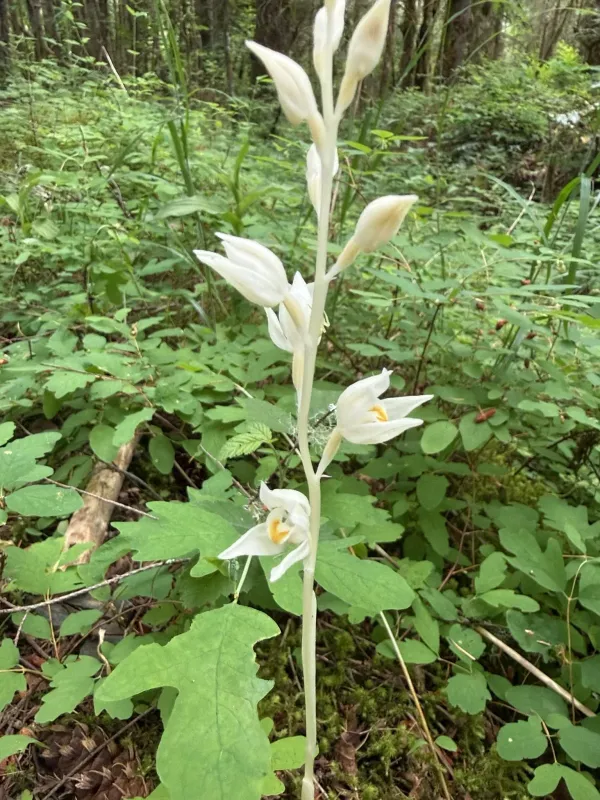
Botanically, the species is characterized by its pale, leafless stem and white flowers, which bloom after the plant has established a stable connection with its fungal partners in the soil.
Main diseases and pests
The primary threats to the species involve the disturbance of its native habitat, particularly logging and clearing of coniferous forests that support the essential fungi.
Environmental factors, such as soil compaction or changes in humidity levels, can disrupt the delicate symbiotic balance required for the orchid to derive nutrition.
Invasive species or shifts in forest floor vegetation can outcompete the orchid's symbionts, leading to a decline in local populations.
Since the species cannot be grown conventionally, there are no agricultural disease control protocols, and the only protection strategy is habitat conservation.
The species remains vulnerable to any human-induced changes to the forest ecosystem, highlighting the need for strictly managed wilderness areas to prevent local extinction.