
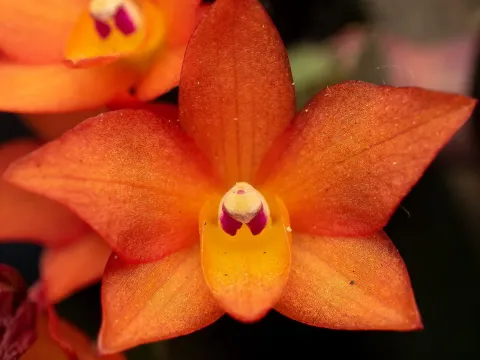
Cattleya
Cattleya Lindl.
Cattleya Lindl. is a prominent genus of epiphytic and lithophytic plants within the Orchidaceae family. Native to tropical regions of Central and South America, these orchids have adapted to environments where they receive filtered sunlight and consistent airflow through their root systems.
What the section contains


Cattleya
Successful cultivation requires a high level of light, specifically bright indirect exposure, which is necessary to trigger the development of pseudobulbs and subsequent flowering. Temperature management is equally critical, as Cattleya species thrive when there is a significant drop between day and night temperatures.
The choice of substrate is vital for preventing root death; a coarse mix based on pine bark and charcoal is standard. This medium allows for quick drainage and deep oxygenation, which are essential because the roots of Cattleya are highly sensitive to prolonged moisture and suffocating conditions.
Relative humidity should be maintained between 60 percent and 80 percent throughout the growing season. Proper fertilization, focused on balanced nutrients with an emphasis on potassium and phosphorus during the blooming phase, helps to maximize the structural integrity and longevity of the flowers.
These orchids are primary commodities in the floriculture industry, valued for their large, fragrant, and vibrant blooms. They serve as the foundation for thousands of registered hybrid crosses that are widely grown in greenhouses and conservatory environments globally.
Cattleya plants are susceptible to various fungal pathogens when managed under poor cultural conditions. Diseases such as anthracnose and alternaria often present as dark, necrotic spots on the leaves, usually triggered by stagnant air or high humidity levels.
Rhizoctonia and Pythium root rot are among the most destructive threats, commonly resulting from improper watering schedules and the use of degraded potting media. Once these pathogens infect the root system, they can compromise the entire vascular structure of the plant rapidly.
Botrytis (grey mold) is a frequent concern during the winter months when plants are in bloom. High moisture levels combined with cool temperatures create the perfect environment for this fungus to damage the petals and foliage, leading to rapid decay.
Other conditions such as snow mold and brown spot necessitate a proactive management approach. Growers are encouraged to use sterile tools during division or repotting to prevent the spread of systemic infections from plant to plant within the greenhouse.
Pest management is a fundamental aspect of Cattleya cultivation, with scale insects and mealybugs being the most common threats. Integrated pest management, including regular inspection and targeted application of horticultural oils or insecticides, is necessary to maintain plant health.