
Large-flowered Helleborine
Cephalanthera epipactoides
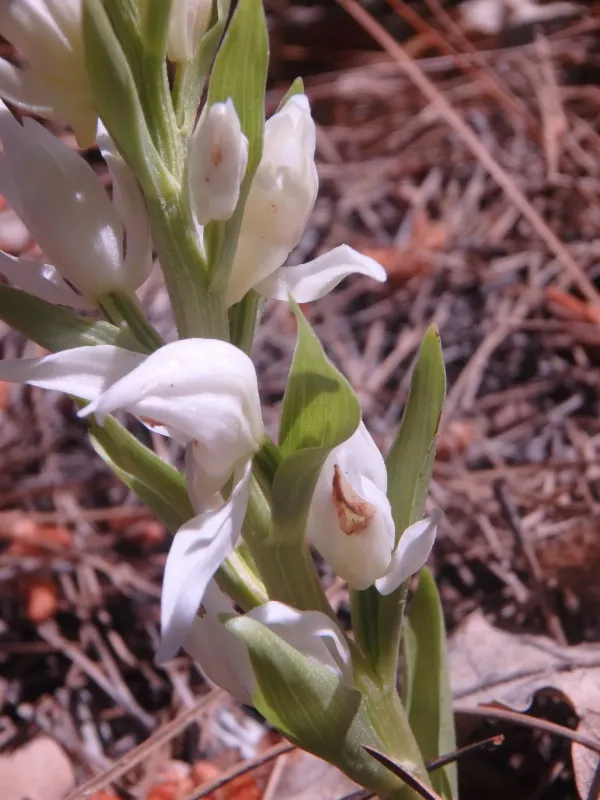
Description
Growing requirements
Cephalanthera epipactoides is a perennial herbaceous plant belonging to the Orchidaceae family. It is distinct for its robust appearance and is native to the Eastern Mediterranean, with its primary distribution centered in Turkey.
This species is commonly found in scrublands, pine forests, and rocky slopes. It thrives in environments that offer a balance between shaded conditions and sufficient light exposure, typical of the Mediterranean climate zones.
The botanical structure of the plant features a tall, erect stem reaching up to 80 cm in height, adorned with lanceolate leaves and a dense spike of large, creamy-white flowers. Its root system is well-adapted to surviving the dry summers typical of its native range.
Regarding soil requirements, this plant prefers calcareous, well-draining substrates. It is not a conventional agricultural crop, and therefore, its cultivation is largely restricted to botanical gardens and conservation programs aimed at protecting endangered orchid species.
In terms of ecological management, maintaining the integrity of its native habitat is paramount. The plant relies on specific mycorrhizal associations in the soil, which are essential for its nutrient uptake and overall development throughout its growth cycle.
Main diseases and pests
The main threats to Cephalanthera epipactoides include habitat fragmentation and land-use changes. Urban expansion and deforestation often lead to the loss of the delicate micro-habitats required for the survival of these wild orchids.
Biological threats include susceptibility to fungal infections and root rot, particularly in areas where drainage is compromised. Additionally, overgrazing by domestic animals can decimate local populations by preventing seed production and damaging the vegetative parts of the plants.