
Caucasian white helleborine
Cephalanthera caucasica
Description
Growing requirements
The Caucasian white helleborine (Cephalanthera caucasica) is a perennial herbaceous plant belonging to the Orchidaceae family. It is important to note that this species is not an agricultural crop but a protected botanical species of significant conservation value.
The natural habitat of this species is confined to the mountainous regions of the Caucasus. It typically thrives in shaded deciduous forests with high humidity levels and nutrient-rich, neutral forest soils that provide the necessary conditions for its complex growth cycle.
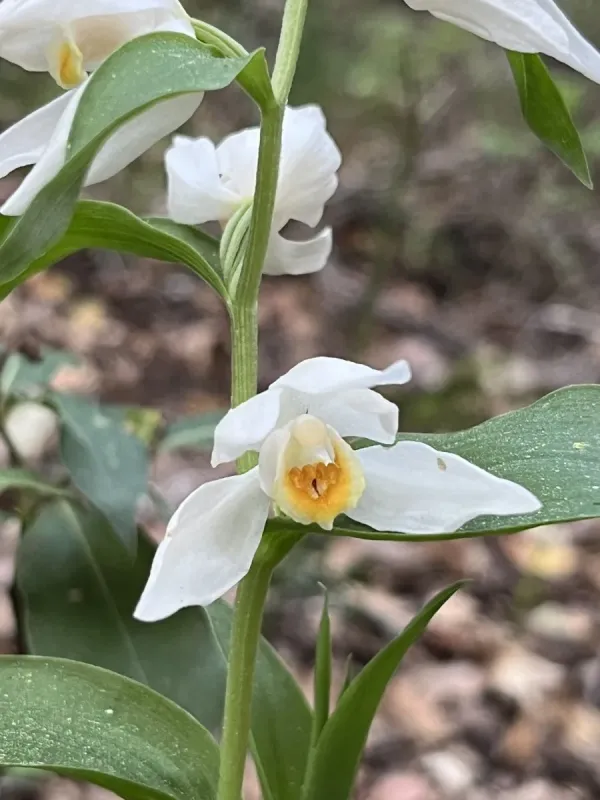
Botanically, the plant is characterized by an erect stem, lanceolate leaves, and a raceme of white flowers. The architecture of the plant is adapted to low-light environments found in the understory of dense forest ecosystems.
A fundamental requirement for the growth of Cephalanthera caucasica is a symbiotic relationship with mycorrhizal fungi. Without these specific soil organisms, the orchid cannot obtain essential nutrients, making it impossible to cultivate as a commercial or agricultural plant.
There is no agricultural use for this plant. As an endangered and rare species, it serves as a bioindicator of healthy forest ecosystems, and its protection is a priority for regional botanical conservation efforts.
Main diseases and pests
The primary threats to this species include habitat destruction caused by deforestation, industrial activity, and changes in land use. Such disturbances frequently destroy the fungal networks necessary for the plant's survival.
Common biological threats include damage by slugs and various insects that feed on the foliage and flower buds. Fungal pathogens affecting the roots can also be detrimental if the local soil microclimate becomes excessively waterlogged or altered.