
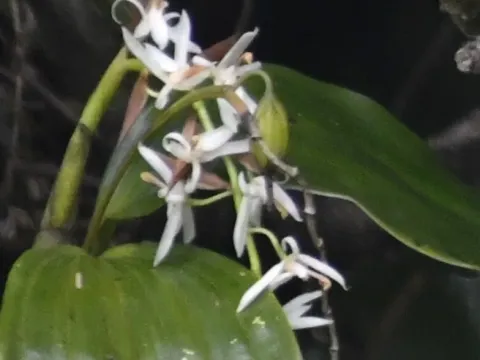
Chelonistele
Chelonistele
Chelonistele is a genus of epiphytic orchids belonging to the Orchidaceae family, native to the tropical rainforests of Southeast Asia. These plants are characterized by their unique growth habit, often forming clusters of pseudobulbs that support slender, decorative leaves.
What the section contains

Chelonistele
The cultivation of Chelonistele requires mimicking its natural tropical environment. High relative humidity, consistently ranging between 70% and 80%, is essential for the healthy development of both roots and aerial parts of the plant.
These orchids thrive in moderate temperature conditions, ideally between 22-26°C during the day and slightly cooler at night. Maintaining this balance is crucial, as extreme heat or prolonged cold can severely stress the plants and inhibit their flowering potential.
A well-draining, airy substrate is vital for Chelonistele. Orchid growers typically use a mixture of high-quality fir bark, charcoal, and sphagnum moss to provide the necessary aeration and moisture retention without risking root suffocation.
Light levels must be kept bright but indirect. Intense, direct sunlight should always be avoided, as it can cause chlorophyll damage and scorch the foliage, while insufficient light will lead to weak growth and the failure of the plant to produce flower spikes.
Spider mites are among the most common pests affecting Chelonistele, particularly in environments where air circulation is poor and humidity levels fluctuate. They feed on cell sap, causing the foliage to appear stippled and faded.
Mealybugs represent another significant threat, often colonizing the crevices between pseudobulbs and leaf bases. These insects secrete a waxy substance that acts as a shield, making them difficult to eradicate without persistent manual cleaning or systemic insecticides.
Root rot, triggered by fungal pathogens like Pythium or Phytophthora, is the most common cause of plant failure in this genus. It is usually the direct result of poor drainage, overwatering, or the use of old, decomposed potting media.
Bacterial soft rot can occur if water remains trapped in the center of new growth for extended periods. This condition progresses rapidly, turning tissues into a mushy, foul-smelling mass that requires immediate surgical removal of the affected area.
Proactive management of these threats involves frequent monitoring, maintaining optimal hygiene in the growing space, and ensuring that all tools are thoroughly sterilized before any pruning or division work takes place.