
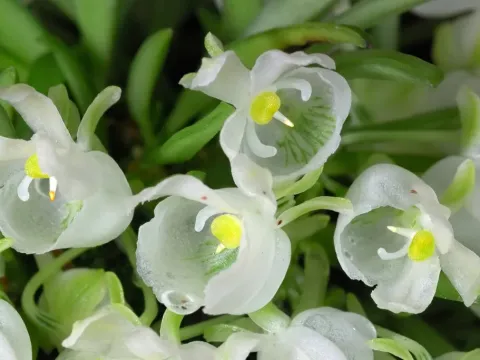
Centroglossa
Centroglossa
Centroglossa is a distinct genus of epiphytic orchids belonging to the Orchidaceae family. These plants are native to the tropical forests of Brazil, where they grow as epiphytes on tree trunks, benefiting from the humid and shaded environment provided by the forest canopy.
What the section contains

Centroglossa
The cultivation of Centroglossa requires mimicking its natural habitat as closely as possible. These plants thrive in cool to intermediate temperatures, generally between 18°C and 24°C, and are sensitive to extremes that can compromise their physiological health and flowering capabilities.
As epiphytes, they possess specialized roots that require significant air circulation. Consequently, the potting medium must be extremely well-draining, typically consisting of bark, charcoal, and sphagnum moss, which prevents the roots from remaining waterlogged for extended periods.
Humidity management is a fundamental aspect of their care routine. Ideally, the humidity levels should remain above 65%, which can be maintained through regular misting or the use of automated humidification systems in a greenhouse or controlled indoor environment.
Light requirements for this genus are moderate. They require bright, indirect light to perform photosynthesis efficiently without damaging the foliage. Placing them away from direct sunlight is essential, as the leaves are prone to sunburn when exposed to intense solar radiation.
Common health threats to Centroglossa include various types of root and crown rot, primarily caused by stagnant water, insufficient airflow, or the use of heavy, water-retentive substrates that do not allow for the necessary aeration of the root system.
Pest management is equally critical, with spider mites and mealybugs posing the most significant threat. These pests typically infest the leaves and pseudobulbs, draining sap and leaving the plant vulnerable to secondary viral or fungal infections if not treated early.