
Stenocereus
Stenocereus
Propagation of Stenocereus is primarily achieved through stem cuttings in commercial and amateur settings. Cuttings must be taken during the active growth phase and allowed to callous in a dry, shaded area for several days before planting to prevent rot.
What the section contains
 Stenocereus beneckei
Stenocereus beneckei
Stenocereus beneckei
 Stenocereus eruca
Stenocereus eruca
Stenocereus eruca
 Stenocereus fricii
Stenocereus fricii
Stenocereus fricii
 Stenocereus griseus
Stenocereus griseus
Stenocereus griseus
 Stenocereus heptagonus
Stenocereus heptagonus
Stenocereus heptagonus
 Stenocereus martinezii
Stenocereus martinezii
Stenocereus martinezii
 Stenocereus pruinosus
Stenocereus pruinosus
Stenocereus pruinosus
 Stenocereus queretaroensis
Stenocereus queretaroensis
Stenocereus queretaroensis
 Stenocereus stellatus
Stenocereus stellatus
Stenocereus stellatus
 Stenocereus thurberi
Stenocereus thurberi
Stenocereus thurberi
Stenocereus
When propagating by seed, a sterile and highly porous substrate is essential to ensure proper drainage and prevent damping-off. Seeds require consistent temperatures between 25 and 30 degrees Celsius for optimal germination.
Young seedlings are highly susceptible to environmental stress and require high-intensity light combined with controlled moisture. Transitioning them to a standard cultivation environment should be gradual to ensure a robust root system development.
Field planting or final potting is typically conducted once the plant has demonstrated vigorous growth and structural integrity. Proper spacing is necessary to facilitate air circulation and minimize the risk of pathogen spread among individual plants.
Successful establishment relies on the correct timing of the first watering post-planting, which should be delayed until the root initiation phase is well underway to avoid tissue decay.
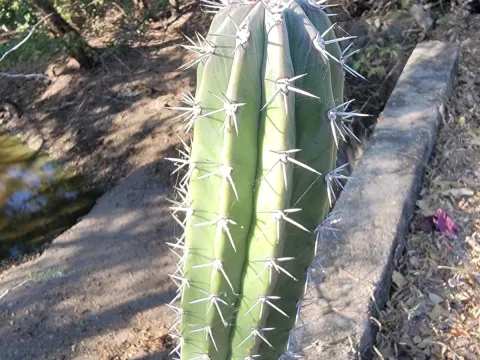
Stenocereus is a genus of large, column-like cacti belonging to the Cactaceae family, native to the arid regions of Mexico and parts of Central and South America. They are well-adapted to environments with prolonged dry seasons and high sun exposure.
Cultivation requires sandy, well-draining soil with low organic matter content. These cacti thrive in neutral to slightly alkaline pH levels, mimicking their natural rocky or desert habitats where rapid moisture drainage is guaranteed.
High levels of solar radiation are non-negotiable for Stenocereus growth; insufficient light results in etiolation, where the stem becomes thin, pale, and structurally weak. Optimal growth is observed in full sun conditions throughout the day.
Watering regimes must mimic desert cycles: deep but infrequent watering during the growing season, and minimal to no moisture during the winter dormancy period. Overwatering is the most frequent cause of crop loss in this genus.
While mature plants are hardy, they are sensitive to freezing temperatures accompanied by high humidity. Frost protection is necessary in cooler climates to preserve the succulent tissue from rupturing.
The primary agricultural utility of Stenocereus lies in its fruit production, commonly referred to as pitaya or Mexican cactus fruit. The fruit is highly valued for its sweet, juicy pulp and nutritional density, making it a lucrative specialty crop.
Productive harvests require cross-pollination in many species; thus, ensuring the presence of natural pollinators or manual pollination is critical during the flowering season. Plants generally start bearing fruit once they reach mature size, often after several years of cultivation.
Harvesting is labor-intensive due to the presence of spines on the fruit skin, which must be carefully removed or handled during collection. Once harvested, the fruits have a relatively short shelf life and require efficient processing or cold storage.
Yield consistency is maintained through appropriate nutrient supplementation, specifically potassium-rich fertilizers applied during the active bloom period to support fruit set and development.
Sustainable farm management involves monitoring for fruit maturation, which is often signaled by a subtle change in skin texture or color, indicating peak sugar accumulation.
Fungal rots, including stem rot and root rot, represent the most significant threat to Stenocereus health. These diseases typically manifest when cultural conditions involve excessive soil moisture, high humidity, or poor soil aeration.
Pests such as mealybugs and spider mites frequently colonize cacti under greenhouse conditions. These pests damage the epidermis and suck the plant sap, leading to stunted growth and providing entry points for secondary bacterial or fungal infections.
Root-knot nematodes can severely affect yield by restricting water and nutrient uptake. Management strategies include soil solarization or the use of sterile growing media to prevent initial nematode infestation.
Mechanical damage from handling or weather events acts as a vector for pathogens. Proper wound sanitation, such as dusting cuts with antifungal agents, is recommended during pruning or propagation.
- Regular inspection of the root zone for signs of decay.
- Systemic insecticide application to manage sap-sucking pests.
- Strict avoidance of overhead irrigation to keep the stem epidermis dry.