
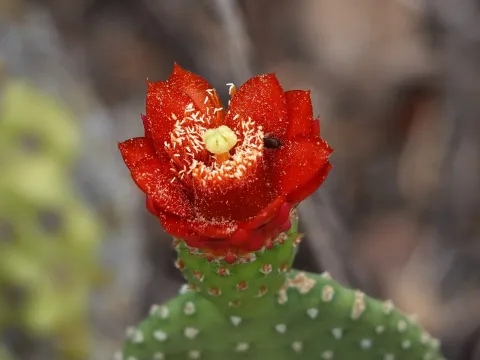
Tacinga
Tacinga
Tacinga is a genus of succulent plants within the Cactaceae family, native primarily to the dry forests and caatinga regions of Brazil. These plants are characterized by their segmented stems and specific adaptations to arid environments.
What the section contains


Tacinga
The cultivation of Tacinga requires high levels of solar irradiance to maintain plant health and structural integrity. In commercial or greenhouse settings, supplemental lighting may be necessary if natural light levels are insufficient during the growing season.
Soil composition must prioritize drainage above all else. A standard mix should include coarse river sand, perlite, and a small portion of organic matter, ensuring the pH levels remain within the slightly acidic to neutral range.
Temperature management is critical for the success of this crop. Active growth occurs during the warm season, while a dormant period with lower temperatures (around 12-15°C) is essential to trigger physiological cycles and overall plant longevity.
Watering practices should mimic natural cycles: generous irrigation during the peak growing months, provided the substrate drains quickly, followed by a strict dry period to prevent root rot and systemic fungal infections.
The most significant threats to Tacinga include mealybugs, which congregate in the crevices of the stem segments. These pests can rapidly weaken the plant by extracting sap and secreting honeydew.
Spider mites are another common pest in low-humidity environments, often causing microscopic lesions that lead to the browning and eventual necrosis of the epidermis.
Fungal pathogens like Fusarium can devastate the root system if the soil remains saturated for extended periods. Preventive application of systemic fungicides is recommended for high-value specimens.
Over-fertilization can lead to weak, succulent growth that is more susceptible to both physical damage and pathogen attack. It is recommended to use balanced fertilizers with low nitrogen content.
Inadequate air circulation promotes the growth of surface molds, which, although not always directly fatal, compromise the appearance and gas exchange capabilities of the plant.