
Stenocereus thurberi
Stenocereus thurberi
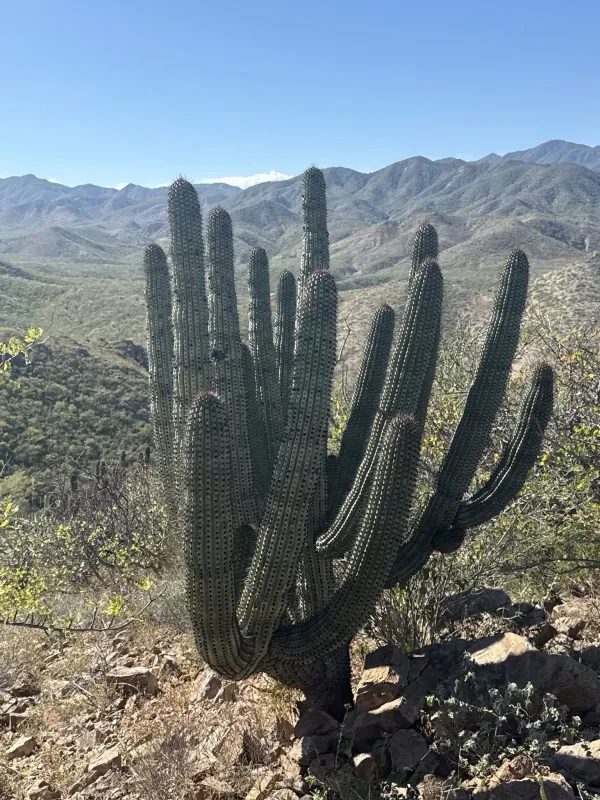
Description
Sowing dates
Propagation of Stenocereus thurberi in cultivation is most commonly achieved through seed sowing or vegetative cuttings. Seeds should be sown in the spring when temperatures are consistently warm, which ensures high germination rates.
Seeds are sown in a well-draining, loose sandy substrate, avoiding excessive moisture that can lead to seedling rot. Seedlings require moderate diffused light and regular ventilation to prevent mold development.
For vegetative propagation, healthy side branches are carefully removed with a sterile tool. The cut site must be air-dried for several days until a callous forms before planting it into a slightly moist potting mix.
The temperature range for successful seed germination should be maintained between 25 and 30 degrees Celsius. It is vital to maintain stable substrate moisture while avoiding direct water drops on the delicate young stems.
The rooting process for cuttings takes anywhere from a few weeks to several months depending on environmental conditions. Using rooting hormones can significantly improve success rates for young cacti in soil mixtures.
Growing requirements
Stenocereus thurberi belongs to the Cactaceae family and is native to desert regions of Mexico and the USA, defining its high requirement for intense solar exposure. In cultivation, this plant prefers the most sun-drenched locations.
The species has specific soil requirements: the substrate must be highly permeable to both air and water. Mixtures based on loam, coarse sand, perlite, and fine gravel are ideal for healthy growth.
During the active growing season, the cactus requires moderate watering only after the root ball has completely dried out. In winter, during its dormant phase, watering should be almost entirely withheld to prevent root rot.
The optimal climatic conditions for this plant involve dry, hot air. High humidity at lower temperatures is a critical risk factor, often leading to fungal infections that can be fatal to the plant.
To ensure healthy growth in containers, a high-quality drainage layer at the bottom of the pot is essential. This prevents waterlogging, which is highly detrimental to the root system of this xerophytic species.
Yield
The economic use of Stenocereus thurberi in its native range is associated with the harvest of edible fruits, which are highly valued by local populations for their sweet flavor and high sugar content.
The fruits reach about 5-8 cm in size, are covered with fine spines, and turn a bright red color when ripe. Harvesting occurs at peak maturity when the pulp becomes soft, succulent, and ready for consumption.
Yield depends directly on the age of the plant, as fruit production only begins in mature specimens that have reached significant size and stem volume. Individual plants can produce dozens of fruits per season.
Fruits are consumed fresh or used as a base for jams, syrups, and refreshing beverages. Indigenous traditional medicine has also historically utilized various parts of the plant for medicinal purposes.
In modern agricultural contexts, commercial fruit production is limited by the slow growth rate of the plant. Today, its primary utility remains in ornamental horticulture and landscaping for arid climates.
Main diseases and pests
The primary threat to the health of Stenocereus thurberi is excess soil moisture, which leads to various types of root and stem rot. Immediate surgical removal of affected tissues is required if soft spots appear on the stem.
Among pests, mealybugs and spider mites pose the greatest danger, as they thrive in hot and dry climates. These pests sap the plant's vitality, weakening its immune system and facilitating secondary infections.
To protect the plant, regular visual inspection of the cactus epidermis is recommended. If infestations are detected, the use of specialized insecticides and acaricides approved for succulent cultures is necessary.
Root mealybugs are hidden enemies that inhabit the soil and damage the root neck. Their presence is often diagnosed by stunted growth and loss of turgor, requiring total substrate replacement and root disinfection.
Disease prevention consists of strictly following a watering regimen, ensuring excellent ventilation, and using clean planting materials. Sterilized, high-quality soil minimizes the risk of introducing soil-borne pathogens.