
Stenocereus griseus
Stenocereus griseus
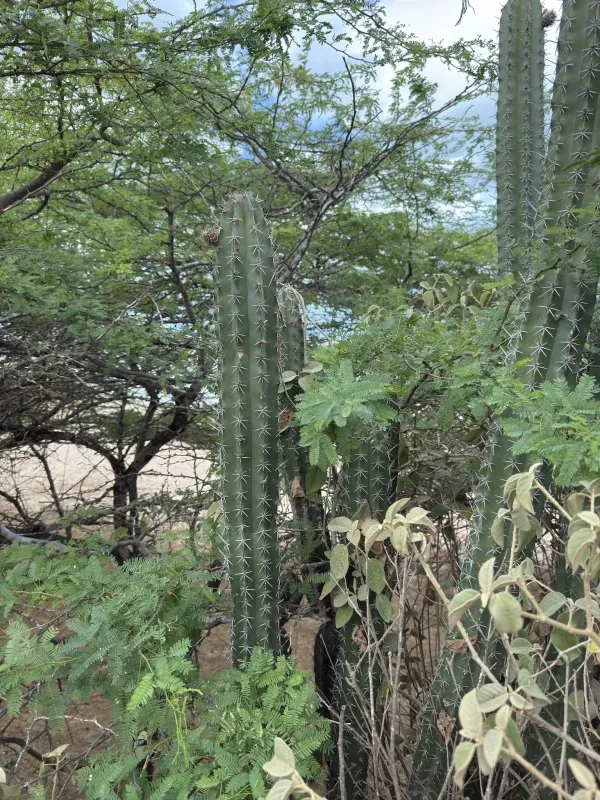
Description
Sowing dates
Propagation of Stenocereus griseus is best achieved through seeds sown in well-drained, sandy substrate during the early spring months.
Seedlings require consistent warmth, ideally above 25°C, to ensure stable germination rates and healthy early growth.
Vegetative propagation using cuttings requires the stems to be calloused for several days in a shaded, dry area before being planted in porous soil.
Young plants are sensitive to direct high-intensity light and benefit from light shading during the first few months of development.
Watering of seedlings must be performed with caution, utilizing a fine mist or bottom-up irrigation to prevent surface soil crusting or rot.
Growing requirements
Belonging to the Cactaceae family, Stenocereus griseus is native to arid environments across the Caribbean and parts of northern South America.
The plant thrives in full sun exposure, which is essential for maintaining its natural columnar shape and stimulating the production of flowers and fruit.
Soil requirements dictate a mix that is highly mineral-based with excellent permeability to prevent water accumulation around the roots.
The ideal temperature range is within tropical parameters, though the plant shows resilience during occasional dry spells and moderate cold periods.
Effective management includes restricted irrigation cycles, allowing the growing medium to dry completely between watering sessions.
Yield
The primary agricultural interest in Stenocereus griseus revolves around its edible fruit, which is highly appreciated for its sweet, refreshing pulp.
Harvesting typically occurs when the fruits turn color and are soft to the touch; spines are easily removed or are absent upon full maturation.
Commercial potential is linked to the plant's hardiness, allowing it to produce yields in environments where water-demanding crops would fail.
The fruits are rich in dietary fiber and vitamins, positioning the species as a valuable component in sustainable agriculture for arid climates.
Beyond food production, the plant serves as a significant ornamental asset, widely used in xeriscaping and as living fence barriers.
Main diseases and pests
The species is primarily susceptible to mealybugs and scale insects, which tend to congregate in the protected niches of the cactus ribs and areoles.
Fungal pathogens, particularly those causing root rot, remain the most lethal threat, often resulting from excessive moisture and poor soil aeration.
Spider mites can become a significant issue in low-humidity environments, leading to unsightly scarring on the epidermis of the cactus.
Implementing a preventive program involving regular visual inspections and occasional application of eco-friendly insecticidal soaps is recommended.
Proper sanitation in the growing area, combined with controlled humidity levels, remains the most effective strategy for ensuring crop health.