
Stenocereus eruca
Stenocereus eruca
Description
Growing requirements
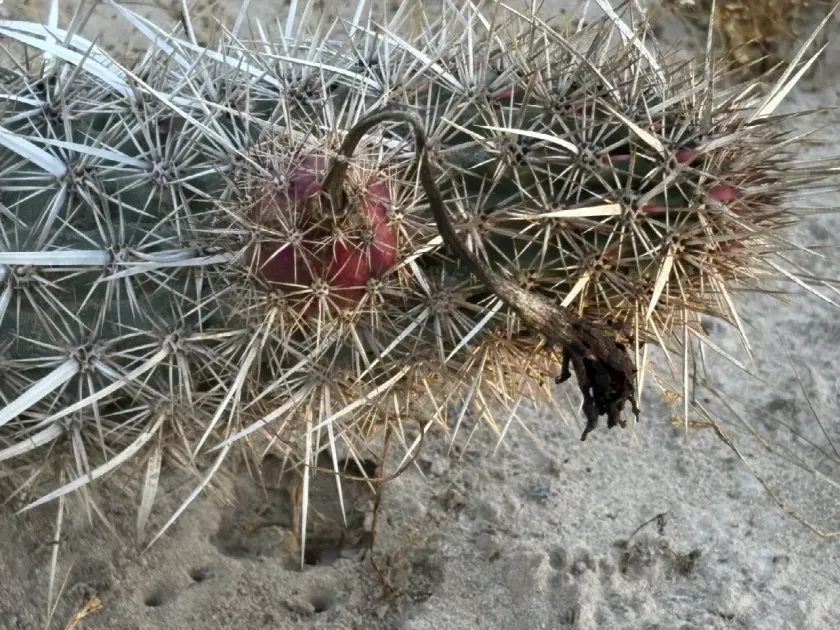
Stenocereus eruca, commonly known as the creeping devil, is a fascinating member of the Cactaceae family. It is distinctive for its prostrate growth habit, where the stem crawls along the ground, rooting at nodes and dying off at the older end, effectively moving across the desert floor.
The species is endemic to the Baja California Peninsula in Mexico. It has evolved to survive in arid, sandy substrates under intense solar radiation, making it highly specialized for nutrient-poor and moisture-deficient environments.
Cultivation requires full sun exposure to maintain its characteristic dense, hooked spines and structural integrity. In a greenhouse setting, it needs high light intensity, ideally achieved through Southern exposure with no overhead shading.
The growing medium must be highly porous. A mix of coarse sand, perlite, and small gravel is essential to ensure rapid drainage, preventing the stems from sitting in moisture, which is lethal for this species.
Temperature management is critical as the plant is not frost-tolerant. It thrives in temperatures between 20C and 35C during the growing season and requires a completely dry, cool environment during its winter dormancy period.
Main diseases and pests
Root rot is the most prevalent threat, almost always caused by overwatering or insufficient drainage. Once the internal tissues of the stem become soft and discolored, salvage is rarely successful.
Mealybugs are the primary pest concern, often nesting deep within the protective cover of the rigid, formidable spines. Monitoring requires careful observation using a flashlight or magnifying lens.
Fungal infections can spread rapidly if air circulation is poor, particularly during humid weather. Maintaining constant, gentle airflow is vital to prevent spore germination on the epidermis.
Soil-borne pathogens can be introduced through contaminated tools or non-sterilized growing materials. It is strongly advised to bake or sterilize any soil used for potting this rare cactus.
Sunburn is a risk if plants are moved abruptly from low-light conditions to direct sun. Acclimatization must be gradual over several weeks to allow the epidermis to develop sufficient protective pigmentation.