
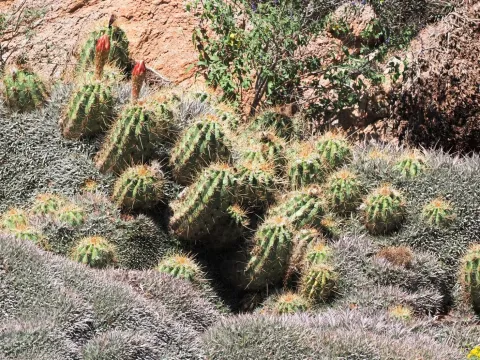
Soehrensia
Soehrensia
Soehrensia is a genus of cacti belonging to the Cactaceae family, known for its robust and imposing structure. Originating from the high-altitude regions of the Andes, specifically in Argentina and Bolivia, these plants are well-adapted to harsh environmental conditions.
What the section contains
 Soehrensia angelesiae
Soehrensia angelesiae
Soehrensia angelesiae
 Soehrensia arboricola
Soehrensia arboricola
Soehrensia arboricola
 Soehrensia bruchii
Soehrensia bruchii
Soehrensia bruchii
 Soehrensia candicans
Soehrensia candicans
Soehrensia candicans
 Soehrensia formosa
Soehrensia formosa
Soehrensia formosa
 Soehrensia huascha
Soehrensia huascha
Soehrensia huascha
 Soehrensia schickendantzii
Soehrensia schickendantzii
Soehrensia schickendantzii
 Soehrensia spachiana
Soehrensia spachiana
Soehrensia spachiana
 Soehrensia strigosa
Soehrensia strigosa
Soehrensia strigosa
 Soehrensia tarijensis
Soehrensia tarijensis
Soehrensia tarijensis
Soehrensia
In terms of light requirements, Soehrensia demands high-intensity sunlight to maintain its structural integrity. Cultivation in greenhouses or bright sun-exposed areas is essential; insufficient light levels can lead to etiolation, which significantly weakens the plant and spoils its form.
The soil for these cacti must provide excellent drainage. A mineral-based potting mix, composed of sharp sand, grit, and very little organic matter, is ideal. This composition prevents root rot, which is the most common cause of failure in cultivating these high-altitude species.
Climate conditions should mirror their native habitat, which includes a distinct period of dormancy. During winter, these plants require a cool, dry rest phase with temperatures dropping significantly, which is crucial for stimulating the development of flower buds for the following season.
The primary utility of Soehrensia lies in horticulture and botanical interest. They are prized by collectors for their large, spectacular flowers and their ability to thrive in specialized succulent collections where their slow-growing, sculptural form serves as a focal point.
Fungal infections and rot are the primary threats to Soehrensia, typically triggered by improper irrigation or poor ventilation. If the substrate remains wet for extended periods, the root system decays rapidly, leading to irreparable damage to the vascular system of the cactus.
Spider mites are the most persistent pests affecting this genus. They thrive in dry, stagnant air conditions and feed on the surface of the stem, leaving behind discolored patches and stunted growth. Regular misting or monitoring with specialized acaricides is highly recommended.
Mealybugs are another common challenge, often hiding in the dense clusters of spines where manual removal is difficult. Systemic insecticides are generally effective for control, provided the dosage is adjusted to prevent chemical stress to the epidermis of the plant.
Treatment for fungal rot involves excavating the affected area, applying sulfur or copper-based fungicides, and leaving the wound exposed to air until a callous forms. Ensuring that the plant remains completely dry during the recovery phase is essential for successful healing.
To prevent these threats, maintaining a clean environment and ensuring adequate airflow around the plants is key. Additionally, sterilizing all potting media and avoiding overcrowding in the collection reduces the risk of widespread infestation or disease transmission.