
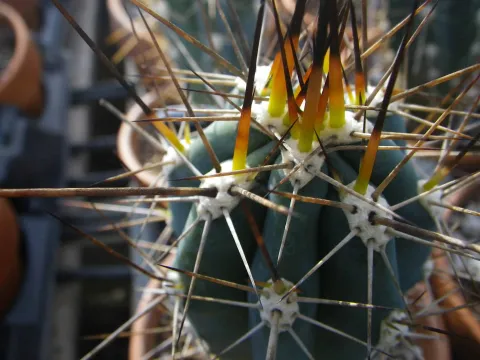
Stetsonia
Stetsonia
Stetsonia is a monotypic genus of cactus within the Cactaceae family. This impressive columnar plant is known for its tree-like habit, featuring a robust central trunk that branches out as the plant matures in its native habitat.
What the section contains

Stetsonia
The plant originates from the arid regions of South America, specifically in Argentina, Bolivia, and Paraguay. It has evolved to thrive in high-heat environments and sparse rainfall, making it an excellent example of biological adaptation.
For successful cultivation, a highly porous and inorganic soil mix is essential. Using a combination of sand, perlite, and coarse mineral components ensures that moisture does not remain trapped around the root zone, preventing rot.
Light intensity is a critical factor for Stetsonia. It requires full, direct sunlight throughout the year to maintain its structural integrity and encourage the development of its signature long, needle-like spines.
Agrotechnical management involves strict adherence to seasonal cycles. During the growing season, water should be applied only when the substrate has dried out completely; in winter, the plant enters a dormant phase and needs minimal moisture.
The primary threat to Stetsonia health is root system damage caused by overwatering. Excess moisture in the root zone quickly creates an environment for opportunistic fungi to proliferate, leading to total plant collapse.
Mealybugs are the most frequent insect pests. These pests hide deep within the crevices between the ribs of the cactus, making them difficult to detect until the plant starts showing signs of stunted growth or chlorosis.
Spider mites represent a significant risk, especially in dry and poorly ventilated conditions. They feed on the epidermis, creating unsightly brownish, cork-like scars that reduce the commercial and aesthetic value of the specimen.
Bacterial soft rot can occur if the cactus is wounded during handling or if the environment is too humid without sufficient airflow. Once established, this condition is notoriously difficult to treat and often requires surgical intervention.
To mitigate these risks, growers should prioritize proactive measures such as using sterilized potting mixes, conducting frequent plant inspections, and ensuring the environment remains dry with adequate natural ventilation.