
Stenocereus queretaroensis
Stenocereus queretaroensis
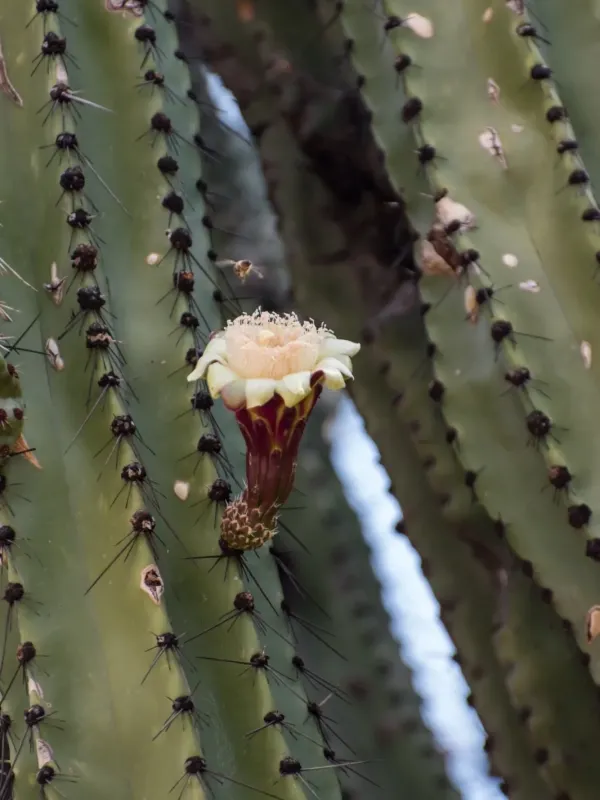
Description
Sowing dates
Propagation of Stenocereus queretaroensis in commercial farming is primarily performed via cuttings. The best time for this operation is during the active growth season when air temperatures remain above 20°C.
Seed propagation is less common and requires strict temperature control. Seeds should be sown in a sterile substrate at 25–28°C, maintaining constant humidity until germination occurs.
Cuttings must be dried for several days to form a callous before planting to prevent rot. This step is critical for successful establishment in the field.
When planting young specimens, proper drainage is essential. Commercial plantations often utilize ridge planting systems to prevent waterlogging.
Field layout must account for the mature plant size, maintaining row spacing of up to 3 meters to allow for machinery passage.
Growing requirements
Stenocereus queretaroensis belongs to the Cactaceae family and is a typical xerophyte. It requires intense, full-day solar exposure for optimal health and fruit production.
The culture thrives in well-drained, sandy, or stony soils with a neutral to slightly alkaline pH. Heavy clay soils are unsuitable due to the high risk of root rot.
The ideal climate is arid with moderate rainfall. The plant is highly sensitive to freezing temperatures and requires protection if frost is predicted.
During the active growth season, potash-phosphorus fertilizers should be applied to maximize yield. Nitrogen applications must be limited to prevent excessive tissue growth prone to splitting.
Irrigation must be strictly managed: heavy watering is beneficial during fruit development, while a distinct dry period is needed for the dormant phase.
Yield
The primary economic value of this crop is its edible fruit, often referred to as a type of pitaya. These fruits have a sweet flavor profile and high nutritional density.
Yield depends on the plantation age and the quality of agricultural management. Full-scale production typically begins between the 4th and 6th year of growth.
Stenocereus fruit has a short shelf life, requiring efficient logistics post-harvest. The produce is suitable for fresh consumption or processing into juices and jams.
The crop demonstrates high productivity potential in arid regions where traditional fruit orchards are not economically viable.
- Average fruit weight ranges from 150 to 300 grams.
- Harvesting is often staggered as the ripening process occurs over an extended period.
Main diseases and pests
Fungal diseases caused by excessive moisture in the soil or air represent the primary threat to the plantation. Root rot is particularly dangerous for this species.
Among pests, mealybugs and spider mites cause the most significant damage by feeding on young succulent tissue. Effective control requires specific acaricides.
Physical damage to the cactus epidermis can lead to secondary bacterial infections. Minimizing mechanical injury during routine care is essential.
In regions with higher humidity, preventative treatments with broad-spectrum fungicides are necessary to protect the plant health.
Young seedlings are also susceptible to slug damage, requiring regular monitoring of the soil surface during the early establishment phase.
Harvesting
Harvesting Stenocereus queretaroensis is performed manually due to the sharp spines present on the fruit and stem. Workers must use protective gloves and specialized harvesting tools.
Maturity is determined by the skin color changing to a deeper, more vibrant hue. Harvesting too early negatively impacts the sugar content and overall taste.
Harvesting should be completed in the early morning to minimize moisture loss post-harvest. Care must be taken not to damage the areoles when detaching the fruit.
Once collected, the fruits are graded by size and cooled immediately to prolong their market life.
For export, fruits are packed in ventilated containers that prevent mechanical compression during shipping.