
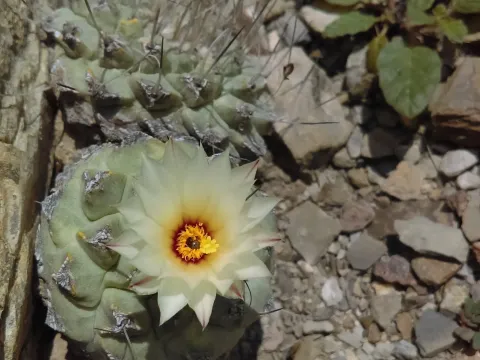
Strombocactus
Strombocactus
Sowing Strombocactus seeds is a delicate task as the seeds are extremely small, resembling fine dust that requires careful handling.
What the section contains

Strombocactus
Spring is considered the optimal season for sowing, as the increasing light duration provides the necessary biological trigger for germination.
A sterilized mineral-based substrate, consisting mainly of fine sand and crushed limestone, is essential for successful seedling development.
Seeds should be sown on the surface without covering them and kept in high humidity conditions under glass until emergence.
The growth rate of seedlings is notoriously slow, requiring long-term monitoring and stable environmental conditions for successful establishment.
Strombocactus is a genus in the Cactaceae family, native to the limestone cliffs of central Mexico, which dictates its specialized growth habits.
This species requires high levels of solar radiation but benefits from light shade during the peak heat of summer to prevent epidermal burns.
The soil must be strictly mineral-based, providing excellent drainage to prevent the accumulation of moisture around the root neck.
During the winter, the plant requires a cool, dry dormant period to prepare for the spring growth and seasonal blooming cycle.
Watering should be very cautious, allowing the soil to dry out completely between applications to mimic the arid natural environment.
Root rot is the most common threat to Strombocactus, primarily caused by improper watering practices or inadequate substrate permeability.
Spider mites represent a significant risk, especially in low-humidity greenhouse environments where the plant can be severely damaged.
Mealybugs are another common pest that tends to hide within the complex structure of the plant, requiring vigilant inspection.
Integrated pest management, including regular inspections and the use of targeted systemic acaricides, is recommended for effective control.
Maintaining high hygiene standards in the cultivation area is crucial for preventing the spread of fungal pathogens and pests among specimens.