
Pelecyphora strobiliformis
Pelecyphora strobiliformis
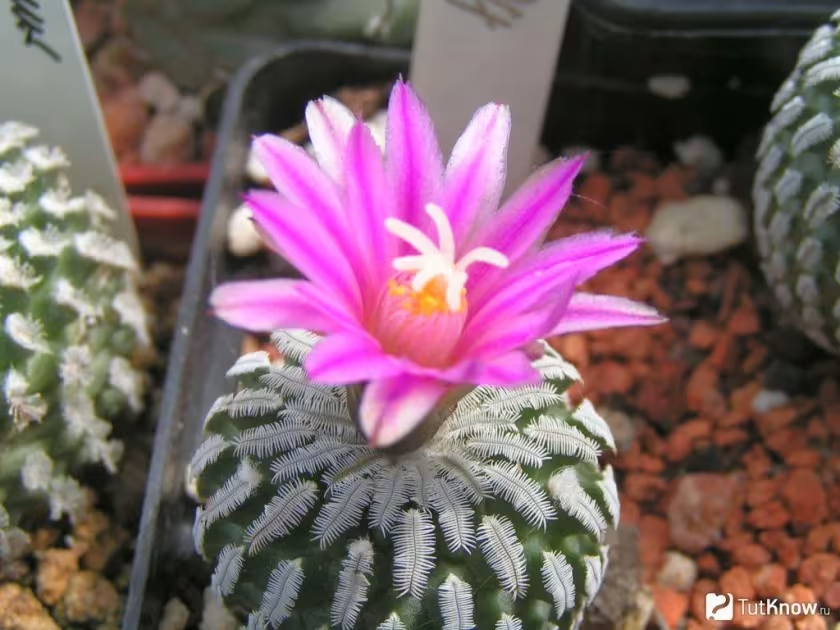
Description
Sowing dates
Sowing Pelecyphora strobiliformis seeds should be performed in early spring to utilize the increasing day length required for the seedlings' development.
The ideal temperature for germination ranges between 22 and 25 degrees Celsius, requiring a consistent environment to break seed dormancy.
Use a sterile, mineral-based substrate consisting primarily of fine sand and crushed rock to prevent dampening-off diseases during the initial stages.
Sown seeds must be kept in a lightly humid environment covered with glass or plastic to maintain humidity until the first germination signs appear.
Seedlings are extremely slow-growing and require patience; do not rush to transplant them until they have developed a robust root system.
Growing requirements
Pelecyphora strobiliformis, a member of the Cactaceae family, is a slow-growing species native to the limestone hills of San Luis Potosí, Mexico.
This species thrives in full sun but prefers moderate shading during the hottest summer afternoons to prevent sunburn on its unique tubercular skin.
The soil requirements are strict: use a highly porous, gritty mix consisting of volcanic rock, sand, and a minimal fraction of loam or potting soil.
Watering must be very infrequent, allowing the substrate to dry out completely between waterings, and stopped almost entirely during the winter.
Proper air circulation is vital for this cactus to avoid fungal infections, as its structure tends to trap moisture if kept in stagnant environments.
Main diseases and pests
The most common threat is root rot caused by excessive moisture or a substrate that does not drain rapidly enough, often leading to sudden plant loss.
Mealybugs are a significant pest, often hiding deep within the dense, spirally arranged tubercles, making them difficult to spot and treat manually.
Red spider mites may attack during periods of low humidity, causing unsightly blemishes and weakening the cactus by piercing its outer layers.
Implementing a strict pest management program involving systemic insecticides is essential for protecting such a slow-maturing and valuable specimen.
- Avoid overhead watering to keep tubercles dry.
- Inspect crevices regularly for signs of white cottony masses.
- Maintain a dry and cool environment during the dormant winter phase.