
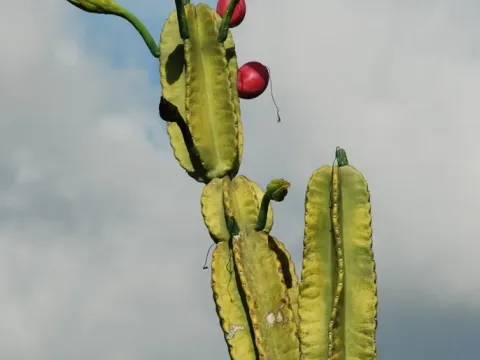
Cereus
Cereus Mill.
Cereus (Cereus Mill.) is a genus of large tree-like or shrubby cacti belonging to the Cactaceae family. These plants are characterized by strong, often columnar stems that can reach significant sizes in their natural habitat, resembling large pillars.
What the section contains


Cereus
The origin of the culture is the arid regions of Central and South America, as well as the Caribbean islands. In the wild, Cereus cacti have adapted to life in hot climates with sharp daily temperature fluctuations and long periods of drought, which ensures their high endurance.
For successful development, the culture requires well-drained, breathable soil mixtures with low organic content and a neutral pH level. The presence of high-quality drainage is a crucial condition, as moisture stagnation in the root system is fatal for this succulent.
The plant is photophilous and requires intense sunlight throughout the entire growing season. In conditions of insufficient light, the stems become thin, lose their typical shape and turgor, and the decorative appeal of the plant decreases significantly.
In both commercial and amateur cultivation, temperature control is critical. During the summer, Cereus prefers warmth in the range of 20–30 degrees Celsius, while during the winter dormancy period, a drop in temperature to 10–12 degrees is recommended to stimulate future flowering.
The main threat to Cereus consists of fungal infections arising from excessive moisture in the substrate or poor ventilation. The most common problem is root rot, which requires immediate removal of damaged areas and replacement of the soil medium.
Among pests, spider mites and mealybugs are frequently found on the crop. These parasites suck cell sap from the stem, leading to the appearance of yellow spots, surface deformation, and general weakening of the plant.
Scale insects can also attack the epidermis of the Cereus, attaching themselves firmly to the surface. Regular inspection of the cactus allows for the detection of these colonies at early stages, simplifying control measures using specialized acaricides or systemic insecticides.
When using organic fertilizers with high nitrogen content, the risk of developing pathogenic microorganisms increases. Therefore, agronomists recommend preferring mineral compositions with low nitrogen content specifically formulated for cacti.
To protect against pests, it is also recommended to maintain cultivation hygiene: keeping the surface clean, using sterile substrates, and ensuring regular ventilation of the area where the culture is located.