
Cleistocactus winteri
Cleistocactus winteri
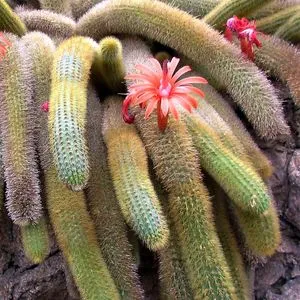
Description
Growing requirements
Cleistocactus winteri is a striking member of the Cactaceae family, native to the mountainous terrain of Bolivia. It is widely cultivated for its cascading stems and vibrant flowers.
The plant thrives in full sun exposure. In greenhouse cultivation, providing at least 6–8 hours of direct sunlight is essential to maintain the dense, golden spine coverage and structural integrity.
Soil composition should prioritize drainage. A professional mix for this species usually includes 50% inorganic material like pumice or coarse sand mixed with high-quality potting soil.
Temperature management is key; the plant prefers warm days (20–30°C) and requires a distinct cooling period during winter to initiate the budding process for spring flowering.
Watering schedules must follow a soak-and-dry method. During the active growth phase, the soil should be thoroughly moistened, then allowed to dry completely before the next application.
Main diseases and pests
Root rot remains the primary threat to the species, usually triggered by waterlogging the soil during dormant winter months or poor container drainage.
Mealybugs are the most persistent pests for Cleistocactus winteri, often hiding in the dense cluster of spines and sucking sap from the stems.
Spider mites can become an issue in low-humidity environments, causing mottled, discolored patches on the skin of the plant, which often leads to secondary infections.
Regular inspection of the stem surfaces is recommended to detect any abnormal spots or signs of insect activity early in the growth cycle.
Effective pest management involves the periodic use of specialized horticultural oils or systemic insecticides, ensuring the chemical reaches the hidden areas between stems.