
Cleistocactus baumannii
Cleistocactus baumannii
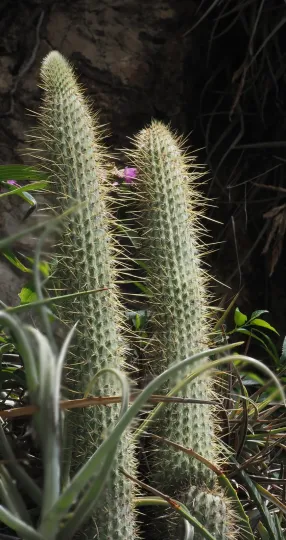
Description
Growing requirements
Cleistocactus baumannii is a perennial columnar cactus belonging to the Cactaceae family, native to the semi-arid regions of South America, including Argentina and Paraguay.
The plant requires full sun exposure during its active growth phase to maintain its structural integrity, though it must be acclimated gradually to prevent epidermis scorching.
Soil requirements focus on extreme porosity; the ideal medium consists of a standard cactus mix amended with crushed gravel or pumice to ensure rapid water drainage.
Temperature management is critical: the plant thrives in warm summer conditions but necessitates a cool, dry dormancy period during winter to initiate future flowering.
Regular irrigation is only recommended during the summer growing season, and even then, the soil must be allowed to dry out completely between successive waterings to mimic natural cycles.
Main diseases and pests
Mealybugs are the primary pest threat to this species, often clustering in the crevices between the ribs of the cactus, which makes physical removal or chemical treatment difficult.
Spider mites can also cause significant damage by piercing the skin of the cactus, resulting in unsightly discolored patches and reduced overall plant vigor.
Root rot is the most common physiological disorder caused by overwatering or using a heavy, moisture-retentive potting mix that suffocates the root system.
Fungal pathogens such as Phytophthora can infect the base of the stem if the plant is exposed to damp, cool conditions without adequate airflow in the greenhouse environment.
Integrated pest management, including regular sanitation and targeted application of systemic pesticides, is essential for maintaining a healthy and disease-free plant population.