
Cleistocactus candelilla
Cleistocactus candelilla
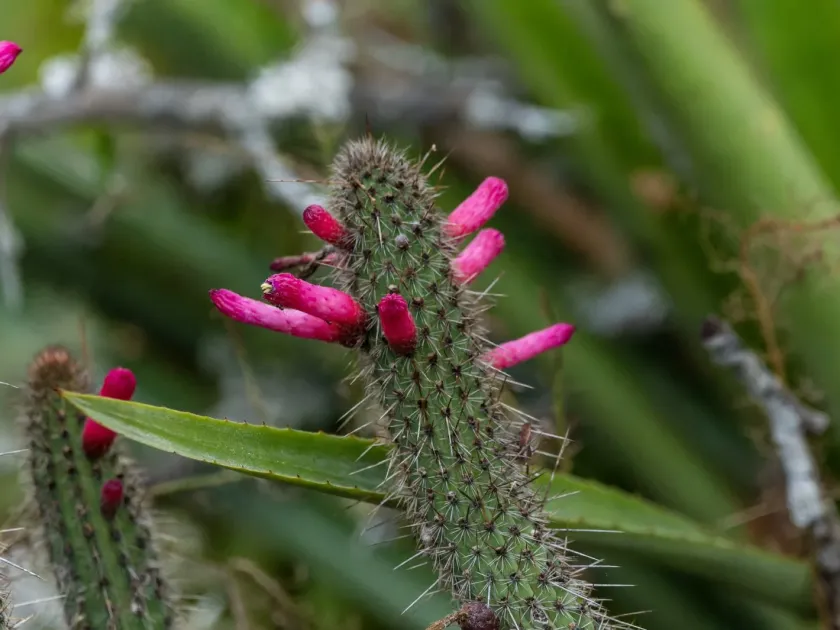
Description
Growing requirements
Cleistocactus candelilla is a member of the Cactaceae family, known for its distinct thin, columnar growth habit. Native to the mountainous terrains of Bolivia, this cactus thrives in rocky, high-altitude environments.
The species is characterized by its clustered stems, which are typically covered in dense, short, and fine spines. These spines serve as an adaptation to minimize transpiration and protect the plant from harsh UV radiation in its native habitat.
For cultivation, this species requires a location with high light intensity, ideally direct full sun. Without adequate light, the plant will become etiolated and lose its structural integrity and ornamental appeal.
The growing medium must be highly porous and inorganic. A mixture consisting of coarse pumice, perlite, and a small amount of screened potting soil works best to ensure rapid drainage and prevent water logging.
Temperature management is crucial: the plant prefers warm days during the growing season but requires a significant drop in temperature during winter nights to induce dormancy and future flowering.
Main diseases and pests
The most common disease affecting this species is root rot, caused by excessive moisture and poor drainage. Once root rot takes hold, the plant is often difficult to save without professional propagation techniques.
Mealybugs are the primary pest concern. They often hide between the ribs and around the spines, making them difficult to spot and treat during the early stages of infestation.
Spider mites can become an issue if the ambient air is too dry and stagnant. Maintaining adequate airflow around the plant helps reduce the probability of such infestations occurring.
Fungal pathogens can attack the epidermis of the stems if wounds are left exposed to humid conditions without proper callous formation. Clean tools and hygiene are essential during any maintenance pruning.
Preventative measures include using a systemic insecticide at the start of the growth season and maintaining strict watering intervals to ensure the substrate dries out completely.