
Cleistocactus smaragdiflorus
Cleistocactus smaragdiflorus
Description
Growing requirements
Cleistocactus smaragdiflorus is a species of columnar cactus belonging to the Cactaceae family. Native to the arid regions of Argentina, Bolivia, and Paraguay, it is highly adapted to environments with limited rainfall and intense solar radiation.
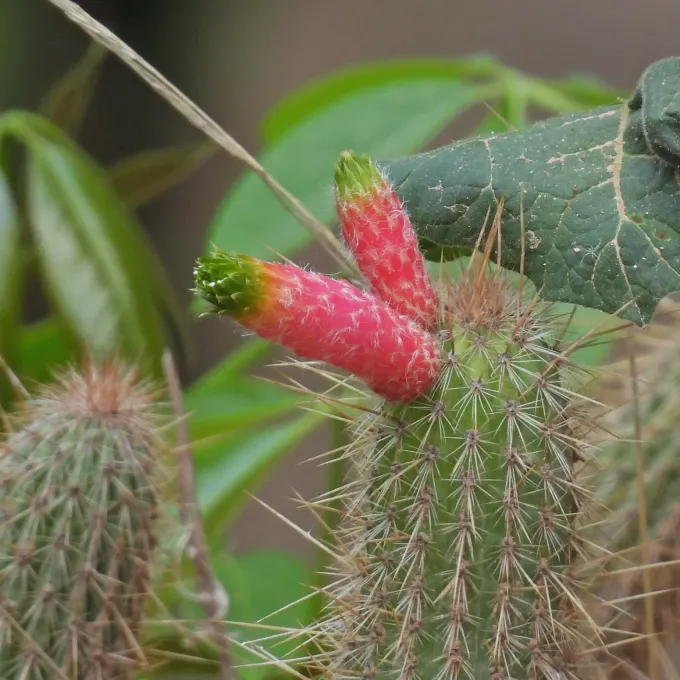
Botanically, the plant features elongated, slender stems that can grow in clusters. These stems are densely covered in spines, which serve as a physiological adaptation to reduce water loss through transpiration and protect the plant from herbivores.
For successful cultivation, the species requires full sun exposure and a well-draining mineral-based substrate. It is essential to avoid dense soil mixes that retain moisture, as these can easily lead to root asphyxiation and the development of pathogens.
The irrigation strategy should mimic the natural cycle of the cactus's habitat. Water deeply during the active growing season, but ensure the substrate is completely dry before the next watering session to prevent rot in the fleshy internal tissues.
Temperature management is vital: the plant thrives in warm conditions during the summer but requires a distinct cooling period during winter. This dormancy phase is necessary to stimulate the characteristic tubular, emerald-colored flowers for which the species is named.
Main diseases and pests
Spider mites are the most common pest found on Cleistocactus, particularly in environments with poor air circulation and low humidity. Their presence can be identified by fine webbing and discoloration of the stem epidermis, often requiring insecticidal soap or acaricides.
Root and stem rot remain the primary threats to plant health, usually caused by overwatering or poor drainage. To mitigate these risks, cultivators should ensure that the pots have ample drainage holes and that the plant is kept dry during the cooler winter months.