

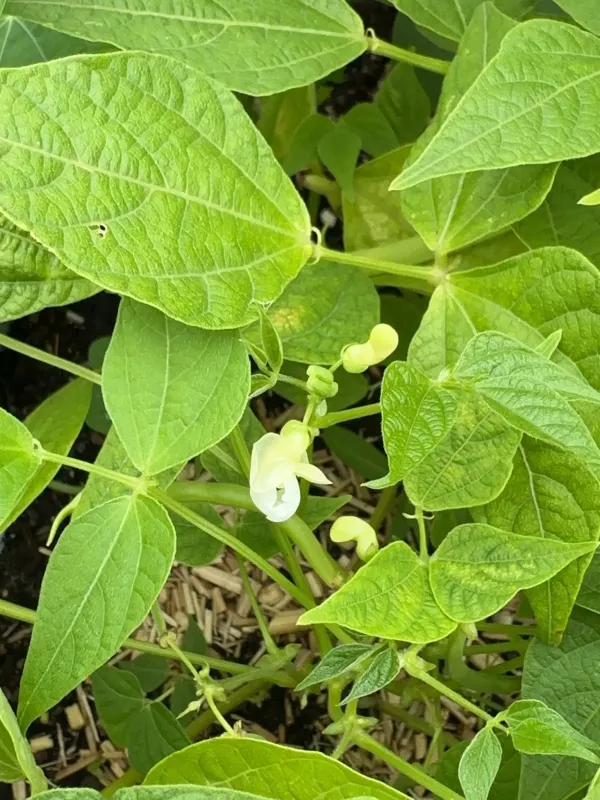
Description
Sowing dates
The common bean is a warm-season crop that should only be planted when soil temperatures at a depth of 10 cm are at least +12...+15°C.
Sowing generally begins in late spring, once the threat of frost has passed to ensure steady germination and development.
Early sowing in cold, damp soil often leads to seed rot and uneven stands, severely reducing the initial population of plants.
In commercial production, staggered planting is often used to ensure a consistent supply of beans throughout the harvest season.
Planting depth typically ranges from 3 to 6 cm depending on soil texture, with shallower sowing preferred in heavier, moisture-retentive soils.
Growing requirements
Phaseolus vulgaris belongs to the Fabaceae family and thrives in well-drained, fertile soils with a pH ranging from 6.0 to 7.0.
This crop requires full sun exposure and a frost-free growing season with optimal temperatures between +20°C and +25°C.
Adequate soil moisture is critical during the flowering and pod-filling stages to prevent blossom drop and ensure uniform pod development.
Common beans are capable of nitrogen fixation, but inoculating seeds with effective rhizobia strains can enhance yield on low-nitrogen soils.
Proper field drainage is essential, as the plants are highly sensitive to waterlogging, which can trigger severe root decay.
Yield
Yield potential of the common bean is significantly influenced by genotype, plant density, and local climatic conditions during the growing period.
Well-managed dry bean crops can produce yields ranging from 2.5 to 4 tons per hectare under favorable conditions.
For snap (green) beans, production is measured by fresh pod weight, with intensive systems achieving yields of 15–20 tons per hectare.
Optimal plant spacing is vital to maximize light interception and facilitate efficient weed control throughout the cycle.
Yield stability is maintained by minimizing biotic and abiotic stresses, particularly during the critical reproductive growth stages.
Main diseases and pests
Common beans are susceptible to a range of fungal and viral pathogens that can compromise plant health and final yield quality.
Major diseases include anthracnose, alternaria leaf spot, rhizoctonia root rot, and white mold, which thrive in humid canopy conditions.
Pink rot and ash rot (charcoal rot) are also significant threats, particularly when plants are under heat and moisture stress.
Viral infections, such as tomato mosaic virus and tobacco mosaic virus, are often spread by aphids and cause significant foliar damage.
- Rigorous crop rotation cycles.
- Use of high-quality, disease-free certified seeds.
- Integrated pest management (IPM) to control insect vectors.
Harvesting
Harvesting methods for the common bean differ substantially between snap beans and dry beans intended for grain or seed.
Snap beans are harvested when pods are young, tender, and fleshy, requiring multiple passes if picked manually or specific machinery for processing.
Dry beans are harvested when the pods are fully mature, dry, and brown, often requiring desiccation to ensure uniform ripeness across the field.
Mechanical harvesting requires precise equipment settings to prevent seed cracking or splitting, which reduces marketability.
Post-harvest, seeds must be dried to approximately 14% moisture content to prevent mold growth and maintain viability during storage.
In brief
59
Crop diseases
Content graph
Crop diseases · 59
Alfalfa mosaicAlternaria leaf spotAngular leaf spotAnthracnoseAphanomyces root rotAscochyta blight of beanAwl nematodeBacterial canker of tomatoBacterial halo blightBean black nodeBean calico mosaicBean common mosaicBean yellow mosaicBeet curly topBlack root rotCercospora leaf spotCercospora leaf spot of beanChaetoseptoria leaf spotCharcoal rotChrysanthemum nematodeClover yellow veinCommon bean blightCommon blight of beansCommon scabCowpea chlorotic spotCucumber mosaicEntyloma leaf spotFusarium root rotFusarium wiltGray leaf spotGray moldLance nematodeMachismo diseaseParatrichodorus minorParatylenchus diseasePeanut leaf spotPeanut stunt virusPeronosporosisPhomopsisPhyllosticta leaf spotPink rotPlant RustPowdery mildewPythium root rotRamularia leaf spot of beansReniform nematodeRhizoctonia root rotRice stem rotRing nematodeRoot-knot nematodeSouthern blightSoybean mosaicSpiral nematodeSting nematodeTobacco mosaic virusTomato mosaic virusWitches' broomYeast spotYellow rust
Content graph
Connections · Common bean
Most often together:
Active ingredients
1 contact
Marketplace
Products · 10
All 10
Herbicides, Desiccants 86
Fertilizers 42
Plant Growth Regulators 10
Bean 5
Adjuvants 3
Insecticides, Acaricides 2
Fungicides 1
Biological Products 1


Zav'yaz'
ТОВ «ОРТОН (Російська Федерація, Московська обл.
Plant Growth Regulators
0
0
·
47
50 offers
3.37 €per 1 l
Buy


Rizolik Kvasolya + Protector Premax
Rizobacter Argentina, S.A.
Plant Growth Regulators
0
0
·
48
No offers
—
Details