
Description
Symptoms
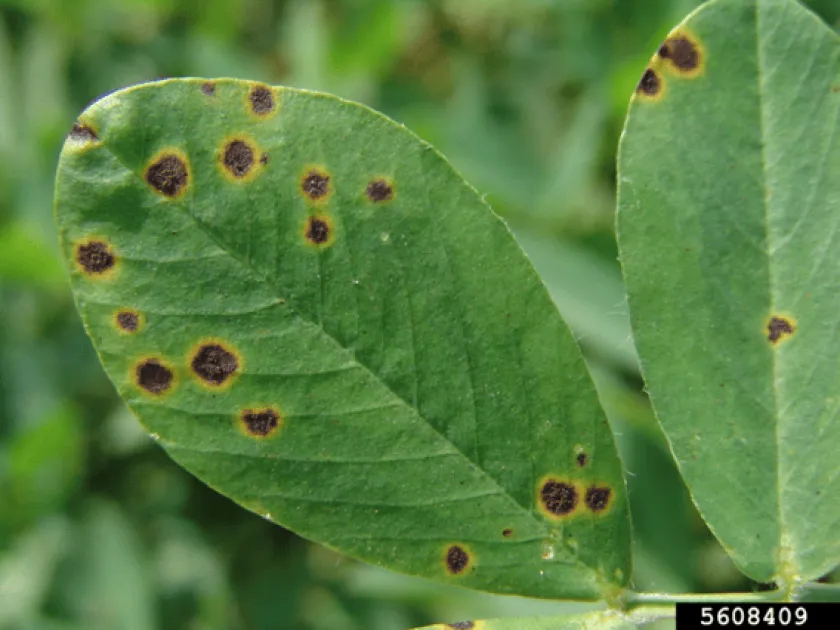
The first signs of the disease appear as small, chlorotic spots on the leaves, which gradually expand and turn dark brown or black.
A yellow halo typically develops around the necrotic lesions, becoming particularly prominent during periods of high humidity and rainfall.
Small black dots, which are the fungal fruiting bodies, appear in the center of the spots and can be identified without any special equipment.
Severe infection causes premature yellowing, withering, and heavy leaf shedding, which significantly weakens the plants during their growth phase.
In advanced cases, the infection may spread to petioles and stems, leading to severe stunted growth and reduced vigor of the entire plant.
Pathogen
The primary causal agents of peanut leaf spot are fungi of the Cercospora genus, specifically Cercospora arachidicola and Cercospora personata.
The pathogen overwinters on crop debris and in the soil, and it can also be disseminated via infected seed material during the planting process.
This fungal disease is known to affect various legumes, most notably peanuts, soybeans, and common beans, causing widespread economic damage.
The fungi reproduce through conidia, which are easily transported by wind, splashing rain, or agricultural machinery moving through the field.
As a parasite, the fungus colonizes leaf tissues, damaging the photosynthetic cells and depleting the energy reserves required for pod development.
Conditions for development
The development of the disease is highly favored by warm, humid weather conditions, with temperatures ranging from 25 to 30 degrees Celsius.
Extended periods of rain, persistent morning dew, and high atmospheric humidity provide the necessary environment for spore germination and infection.
Poor agricultural practices, such as excessive plant density and lack of field aeration, significantly contribute to the rapid spread of the pathogen.
Failure to implement a proper crop rotation cycle leads to the accumulation of fungal inoculum in the soil, increasing infection pressure over time.
Stressed plants, whether due to nutrient deficiencies or prior damage from insect pests, show higher susceptibility to leaf spot infections.
Why it matters
The main impact of peanut leaf spot is the significant reduction in yield, directly caused by the loss of functional leaf area for photosynthesis.
The disease also compromises the seed quality, leading to lower oil and protein content, which reduces the overall commercial value of the crop.
Heavy defoliation leaves the soil exposed, promoting weed competition and hindering the efficiency of mechanical harvesting operations.
Because the disease can affect multiple legume species, it poses a recurring threat to diverse cropping systems, necessitating constant management.
If left unmanaged, leaf spot outbreaks can result in substantial financial losses, making peanut farming unsustainable in highly infested areas.
Protection
The foundation of effective control is a strict crop rotation program, ensuring that peanuts are not replanted in the same field for at least three years.
Deep plowing after harvest is essential to bury crop residues, accelerating the decomposition process and reducing the fungal inoculum in the soil.
Farmers should prioritize the use of certified disease-free seeds and apply appropriate seed treatments to protect young plants from early infection.
During the growing season, timely application of systemic and contact fungicides is critical to preventing the spread of the pathogen when weather conditions are conducive.
- Maintaining optimal plant spacing to ensure adequate air circulation.
- Regular field scouting to detect early infection symptoms.
- Balanced nutrient management to enhance plant immune response.
Pathogens and affected parts
Affects crops · 3
Discussion
No discussions yet — be the first.