
Description
Symptoms
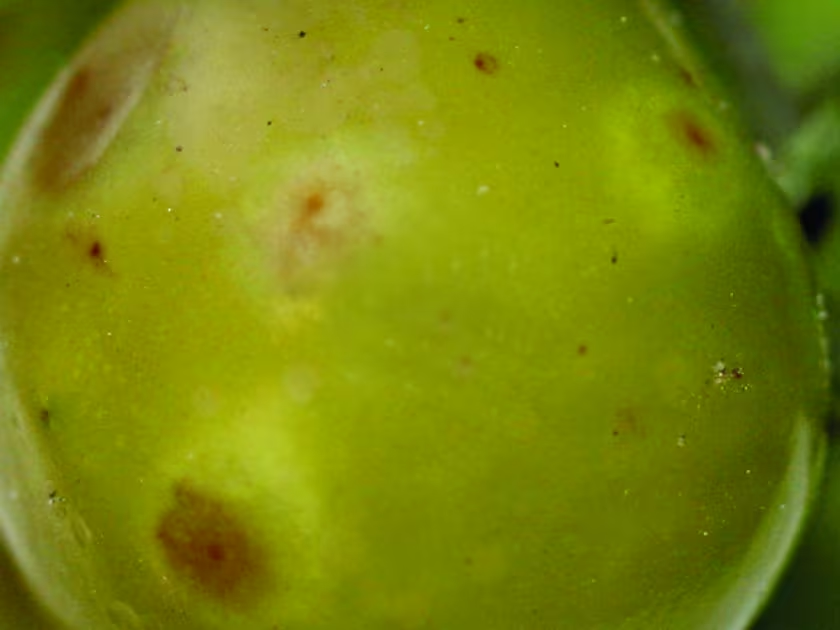
The earliest symptoms appear as small, water-soaked spots on the leaves, which gradually enlarge and turn brown as the plant tissue undergoes necrosis.
A distinctive feature of this disease is the presence of a yellow halo surrounding the necrotic spot, which is caused by bacterial toxins diffusing into the surrounding tissue.
In later stages, dark, sunken lesions may appear on the stems and leaf stalks, potentially leading to wilting, stunting, or the total collapse of the plant part.
Under high humidity conditions, a milky or bacterial ooze may be visible on the surface of the lesions, serving as a primary source for further spread of the bacteria.
When pods or seeds are affected, they often develop dark spots and can become shriveled or deformed, significantly reducing the quality of the harvested produce.
Pathogen
The causative agent of this disease is bacteria of the genus Pseudomonas, most notably the species Pseudomonas syringae, which acts as a major phytopathogen.
This disease is a type of bacterial infection that affects various agricultural crops. Key hosts include rice, common bean (Phaseolus vulgaris), and rye, among other plants.
The bacteria are capable of surviving in seeds, plant debris, and soil. They are highly adaptive and can persist in various environmental conditions between growing seasons.
Dissemination often occurs through wind-blown rain, contaminated tools, or contact with infected plant tissues, allowing the bacteria to spread rapidly throughout a field.
Once inside the plant tissue, the bacteria colonize the intercellular spaces, secreting phytotoxins that trigger the characteristic lesion development observed in infected crops.
Conditions for development
The development of bacterial halo blight is favored by cool to moderate temperatures and high humidity levels, often occurring during periods of frequent rainfall.
Dew and overhead irrigation systems create a surface film of water that allows bacteria to move easily and colonize leaf surfaces through natural openings.
Poor aeration in dense crop stands creates a microclimate conducive to rapid bacterial multiplication, increasing the speed of the infection cycle.
Mechanical damage caused by hail, heavy wind, or agricultural machinery provides entry points for the pathogen, making plants significantly more vulnerable.
Warm, stagnant periods after rain showers further exacerbate the problem by providing the necessary conditions for the bacteria to thrive and infect neighboring tissues.
Why it matters
The economic impact of this disease is high because it directly reduces both the quantity and the market quality of the harvest through tissue destruction.
Infected plants exhibit reduced photosynthetic efficiency, leading to lower yields, stunted growth, and a decrease in the overall vigor of the crop population.
The disease can cause significant losses in seed production, as infected seeds may fail to germinate or produce weak seedlings that succumb to early mortality.
If the infection reaches a high incidence, it can compromise entire fields, leading to total crop failure and the loss of investment in fertilizers and labor.
Secondary infections by saprophytic fungi often follow the bacterial damage, worsening the structural integrity of the plant and further complicating management.
Protection
The most effective strategy is the use of disease-free, certified seeds and resistant crop varieties, which minimizes the initial entry of the pathogen into the field.
Crop rotation and proper field sanitation, such as removing or deep-ploughing crop residues, are essential to break the survival cycle of the bacterium.
- Avoid overhead irrigation during susceptible growth stages.
- Implement proper spacing to improve airflow and reduce humidity.
- Control weeds that may act as alternative hosts for the bacteria.
- Use copper-based bactericides to protect foliage from early infection.
Regular scouting of fields allows for early detection of symptomatic plants, enabling targeted treatments or the removal of infected areas to prevent spread.
Managing insect pests is also crucial, as some insects can act as vectors for the bacteria, spreading the infection rapidly from plant to plant.
Pathogens and affected parts
Affects crops · 3
Discussion
No discussions yet — be the first.