
Description
Symptoms
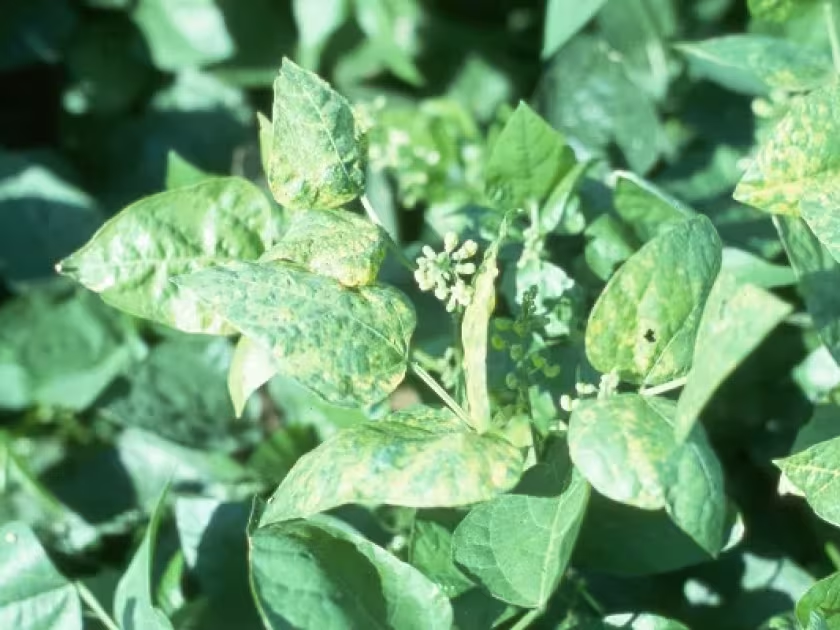
The most distinctive symptom is the development of a bright yellow or cream-colored mosaic pattern on the leaves, resembling calico fabric, which occurs due to the breakdown of chlorophyll.
Infected leaves often show signs of curling, distortion, and swelling or thickening along the primary veins, which significantly hampers the leaf's ability to perform photosynthesis.
Plants affected by BCaMV early in their growth cycle exhibit severe stunting and stunted development, leading to overall reduced plant vigor and height.
Flowering is often negatively impacted, with plants experiencing bud drop or producing deformed pods that contain fewer or smaller seeds than healthy plants.
In advanced stages of the disease, the entire plant may appear chlorotic, with leaves gradually yellowing and drying out prematurely, which can lead to crop failure.
Pathogen
The Bean calico mosaic virus (BCaMV) is the pathogen responsible for this disease. It belongs to the genus Begomovirus, part of the Geminiviridae family, characterized by a single-stranded circular DNA genome.
The virus is primarily transmitted by the silverleaf whitefly (Bemisia tabaci). The vector acquires the virus by feeding on infected phloem tissue and can transmit it for the remainder of its life span.
Upon infection, the virus spreads systemically throughout the vascular system of the host plant, interfering with cellular functions and disrupting normal physiological processes.
The virus primarily affects common beans (Phaseolus vulgaris) but can also impact other leguminous species, which act as alternative hosts in agricultural landscapes.
Because the virus is unstable outside of a living host, its persistence in the environment is dependent on surviving in infected weeds or the continuous presence of its insect vector.
Conditions for development
The disease's spread is heavily reliant on the population density of the whitefly vector. Outbreaks are most common in areas with high whitefly activity.
Warm, arid environmental conditions provide ideal circumstances for the rapid reproduction and migration of Bemisia tabaci, accelerating the spread of the virus across fields.
The proximity of fields to wild leguminous reservoirs allows the virus to survive and move easily from these alternative hosts onto commercial bean crops.
Poor field hygiene and failure to manage weed populations around the crop provide the necessary breeding grounds for the whitefly, facilitating the primary infection stage.
Agricultural practices that encourage early-season infestation, such as delayed planting or poor weed control, contribute significantly to the disease pressure on the beans.
Why it matters
The primary economic harm of BCaMV is the significant reduction in yield quantity and quality, as the virus severely limits the plant's metabolic capacity.
Deformed pods and poor seed filling lead to lower marketability of the crop, and in severe cases, the entire harvest may be deemed commercially non-viable.
Infected plants become increasingly susceptible to secondary stressors, including water scarcity, extreme heat, and opportunistic fungal pathogens, further complicating crop health.
Transmission through contaminated seeds, although less common than vector transmission, remains a risk factor that can lead to early-season outbreaks in subsequent crops.
The disease causes substantial losses to farmers by necessitating additional input costs for pesticide applications and labor-intensive field monitoring to limit its spread.
Protection
The most effective management strategy involves controlling the population of whitefly vectors using systemic insecticides and monitoring fields with pheromone traps.
Ensuring the use of high-quality, virus-free certified seeds is the first line of defense to prevent introducing the pathogen to clean fields.
Strict sanitation and weed management, particularly of wild legumes around the field perimeter, effectively remove natural reservoirs for both the virus and its vectors.
Implementing spatial isolation between bean crops and known host plants can significantly reduce the probability of virus transmission by migrating insects.
- Regular field scouting to detect early infection symptoms.
- Prompt roguing (removal) and destruction of infected plants.
- Practicing crop rotation to break the disease cycle.
- Selecting and planting resistant bean cultivars where available.
Pathogens and affected parts
Affects crops · 1
Discussion
No discussions yet — be the first.