
Description
Symptoms
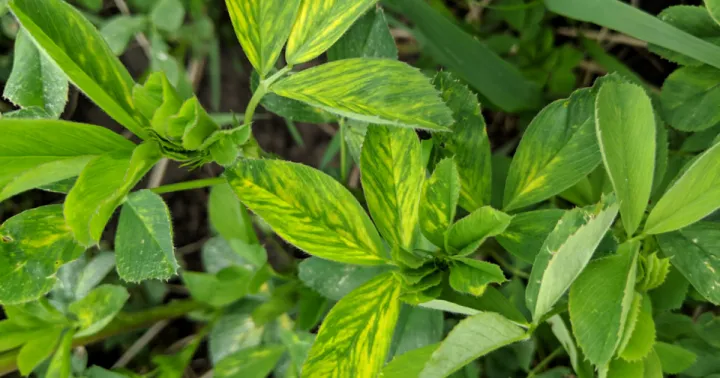
The most distinctive sign of the disease is the development of a characteristic mosaic pattern on the leaves. The leaf surface displays a mottled appearance with alternating light green and yellow patches, often forming clear, distinct patterns.
In many affected crops, significant deformation of the leaf blade occurs, accompanied by curling and crinkling. Leaves may become stunted, appearing smaller than those of healthy plants.
Early stages of infection often show a pronounced retardation in growth and development. Affected plants look suppressed, with shortened internodes, eventually leading to a stunted or dwarfed plant structure.
On specific crops like pepper or beans, symptoms can manifest as necrotic spots or streaks on stems and petioles. In severe cases, the disease can lead to premature leaf drop or plant death.
- Mosaic-like chlorotic leaf spots.
- Deformation and curling of leaf blades.
- Stunted plant growth and development.
- Shortening of internodes (dwarfing).
- Necrotic lesions on stems and petioles.
Pathogen
The causative agent of the disease is the Alfalfa mosaic virus (AMV). It is a widespread phytopathogen with a complex genome consisting of three single-stranded RNA molecules, packaged into bacilliform particles of varying lengths.
This is a viral infection characterized by a remarkably broad host range. The virus can infect hundreds of plant species from various botanical families, making it a persistent and difficult threat to managed agroecosystems.
The list of susceptible crops includes essential agricultural species such as alfalfa (Medicago sativa), soybean, common bean, pepper, lettuce, safflower, tobacco, and various ornamental plants like primrose.
In field conditions, the virus is primarily transmitted by dozens of aphid species. Insects acquire the virus by feeding on infected plants and transmit it to healthy hosts in a non-persistent manner, making control extremely challenging.
In addition to insect vectors, the virus can be transmitted through infected seeds. This is a critical factor for the initial introduction of the infection into new plots and subsequent widespread outbreaks.
Conditions for development
The development of the disease is favored by warm weather conditions, which stimulate the activity and reproductive rates of aphid vectors. High pest populations during warmer months lead to rapid disease spread.
The presence of alternative infection sources near fields is a major risk factor. Perennial legumes, including wild alfalfa, act as primary reservoirs that harbor the virus throughout the winter months.
Dense crop stands and excessive nitrogen fertilization create a favorable microclimate that attracts insect vectors, thereby increasing the probability of virus transmission from plant to plant within the field.
Spread within the field is heavily dependent on wind-assisted movement of aphids. Wind currents can transport infected insects over significant distances, rapidly expanding the boundaries of the infection focus.
The initial infectious pressure is often established by using infected seed material. Planting contaminated seeds ensures the virus is present from the moment of germination, guaranteeing early-season outbreaks.
Why it matters
The primary economic impact is a drastic reduction in crop yield. The virus disrupts plant metabolism, severely reducing photosynthetic efficiency and limiting biomass accumulation.
Product quality suffers significantly: fruits become small, deformed, and lose their market appeal. In forage crops like alfalfa, the nutritional value and palatability of the green mass are substantially decreased.
Infected perennial plants exhibit reduced winter hardiness and decreased resistance to environmental stressors, often leading to premature crop failure and the need for expensive replanting.
For vegetable crops like peppers, yield losses can range from 30% to 80%, rendering the cultivation of susceptible varieties economically unviable without intensive protective measures.
The overall biological productivity of the agroecosystem declines, while the increased costs associated with vector control and crop loss mitigation significantly inflate production expenses.
Protection
The first and most crucial step is the use of virus-free, certified seed material. This remains the most effective strategy to prevent the establishment of primary infection centers in a field.
Maintaining strict spatial isolation between new plantings and old fields of perennial legumes is essential to minimize the risk of virus transmission from natural reservoirs.
Managing aphid populations is vital. Timely application of insecticides during the early stages of plant growth helps to significantly reduce the frequency of virus transmission by vectors.
Agricultural practices should include thorough weed control, as many weeds can serve as intermediate hosts for the virus, as well as the immediate roguing and removal of symptomatic plants.
The development and adoption of resistant or tolerant crop varieties represent the most sustainable and environmentally friendly approach to long-term disease management, minimizing losses without heavy chemical dependency.
Pathogens and affected parts
Affects crops · 11
Discussion
No discussions yet — be the first.