
Description
Symptoms
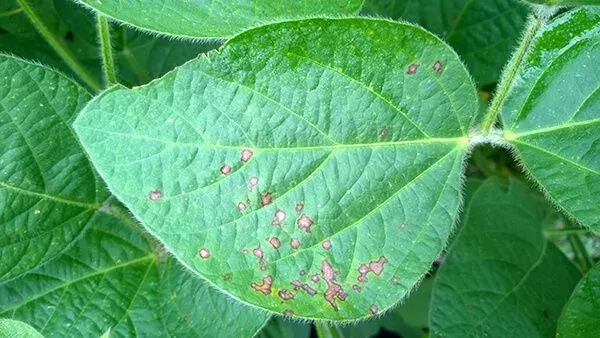
The primary symptoms appear as small, chlorotic or reddish-brown spots on the lower leaves. These spots often develop a characteristic irregular or angular shape as they are bounded by leaf veins.
As the infection progresses, the spots expand and may coalesce, covering large portions of the leaf surface. The center of these lesions often turns necrotic, resulting in a dark brown or greyish color.
A distinct, fuzzy olive-grey mold is frequently observed on the underside of the leaves. This mold consists of the fungal conidia and conidiophores, which are visible to the naked eye under high humidity.
In severe cases, the infection spreads to the petioles, stems, and pods. On pods, the lesions appear as dark, sunken spots, which can lead to seed discolouration and reduced seed quality.
Heavy infections cause premature yellowing of the leaves (chlorosis), leading to leaf abscission (falling off), which severely compromises the plant's photosynthetic capacity.
Pathogen
Cercospora leaf spot in beans is caused by the fungus Pseudocercospora cruenta (syn. Cercospora cruenta). It is a major fungal pathogen that specifically targets legumes, causing significant tissue damage.
The pathogen thrives by infecting the foliage of the host plant. It survives as mycelium or spores on infected crop debris left in the field, as well as on seeds, which allows it to persist between seasons.
The fungus propagates through the production of conidia, which are specialized spores. These conidia are disseminated primarily by wind and water splashes during rainfall, ensuring rapid spread across the field.
Once the conidia land on a leaf surface, they germinate under humid conditions and penetrate the plant tissues, establishing a colony that will eventually produce new generations of spores.
Biological studies indicate that this fungus is a hemibiotroph, initially colonizing living cells before eventually causing cell death and necrosis, which leads to the visible symptoms on the leaves.
Conditions for development
The development of Cercospora leaf spot is highly favored by warm temperatures, typically ranging from 20°C to 28°C, and high relative humidity.
Prolonged periods of leaf wetness caused by dew, light rain, or fog are essential for the germination of spores and the subsequent infection of host tissues.
High planting density contributes to an unfavorable microclimate within the crop canopy, restricting airflow and maintaining the high humidity levels that the fungus requires for rapid growth.
Inadequate soil drainage and over-irrigation can also aggravate the disease pressure by keeping the foliage wet for longer periods during the day.
The disease usually peaks during the mid-to-late growth stages of the bean plant, especially if the weather remains rainy and warm during the pod-filling phase.
Why it matters
The economic impact of the disease is largely due to the reduction of photosynthetic leaf area, which limits the plant's ability to produce energy for seed development.
Premature leaf drop leads to stunted pod development and lower yields, as the plants cannot sustain the metabolic demands required for large, healthy seeds.
The disease also negatively affects the commercial quality of the bean seeds, making them prone to decay and reducing their value in the market.
When the infection is severe, the stress on the plant makes it more susceptible to other biotic and abiotic stressors, leading to overall plant decline.
In epidemic years, yield losses in common bean crops can range significantly, with some studies reporting losses of up to 40-50% in untreated fields.
Protection
The most important control strategy is the use of a strict crop rotation system, ensuring that beans are not grown on the same plot more than once every three years.
Deep plowing after harvest is highly effective as it buries crop residues, promoting their decomposition and significantly reducing the overwintering inoculum of the fungus.
The use of certified, disease-free seed and treating seeds with fungicides before planting are critical steps to prevent the introduction of the pathogen into new areas.
Fungicide applications during the vegetative growth stage can be beneficial if conditions are conducive to disease spread. Protective sprays are most effective when applied before the disease becomes widespread.
- Avoid overhead irrigation where possible to keep foliage dry.
- Maintain proper plant spacing to improve air circulation.
- Control weeds that may harbor the fungus as an alternative host.
- Select and plant resistant or tolerant bean cultivars when available.
Pathogens and affected parts
Affects crops · 1
Discussion
No discussions yet — be the first.