
Description
Symptoms
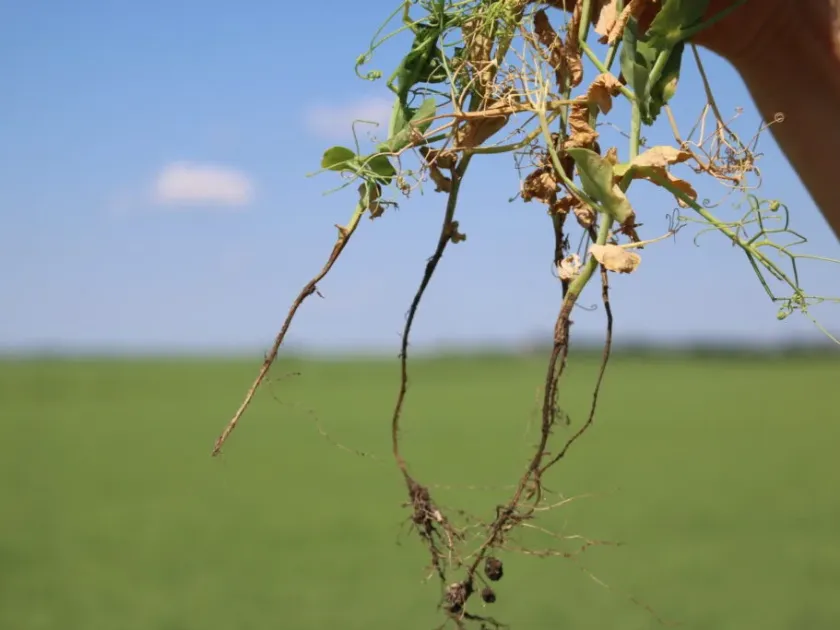
Early symptoms of Aphanomyces root rot typically appear as water-soaked, pale yellow lesions on roots and the hypocotyl. Over time, these lesions transition to a tan or brown color, eventually turning black as the tissue decays.
A key diagnostic sign is the softening and rotting of the entire root system. In advanced stages, the outer layer of the root (the epidermis) can be easily sloughed off, leaving the inner vascular cylinder exposed and dysfunctional.
Plants in the field exhibit chlorotic foliage and a significantly slowed growth rate. In severe cases, wilting occurs during the hottest part of the day, as the compromised roots cannot meet the plant's transpiration requirements.
The disease often shows a patchy distribution in the field, clustering in low-lying or poorly drained areas where moisture accumulates. Affected plants are easy to pull from the soil because the root system is fragmented and weak.
Secondary symptoms may include an overall reduction in plant density and the death of seedlings shortly after emergence. If plants survive the initial infection, they often remain stunted and produce significantly lower yields throughout the season.
Pathogen
The causative agent of this disease is the oomycete Aphanomyces euteiches. Although often referred to in a general sense as a fungal disease, it is biologically classified as an oomycete, which necessitates specific water-based conditions for its life cycle and mobility.
The pathogen produces motile zoospores that navigate through soil moisture to infect host plant roots. Survival over many years is ensured by oospores, which are highly resilient structures capable of persisting in the soil for a decade or longer, even in the absence of a host crop.
A wide range of legume crops is susceptible to this infection, including peas, alfalfa, lentils, and common beans. Aphanomyces euteiches primarily targets the root system during the early stages of plant development, which is critical for establishing a healthy and productive crop.
The pathogen disrupts the root cortex, destroying the plant's ability to transport water and essential nutrients effectively. This internal damage manifests quickly in the plant's inability to maintain vigor, leading to chlorosis, stunted growth, and ultimate collapse.
Dissemination across fields occurs primarily through the movement of contaminated soil particles on machinery or via water runoff. Fields with a history of intensive legume cultivation are particularly prone to high inoculum levels.
Conditions for development
Excessive soil moisture is the primary driver of Aphanomyces root rot. Zoospores require saturated soil conditions to move toward the roots and initiate infection; therefore, the disease is most prevalent in years with heavy spring rainfall.
The optimal temperature range for the pathogen's activity is between 15 and 25 degrees Celsius. These conditions, combined with high soil moisture, favor rapid multiplication of the pathogen and the development of severe disease outbreaks.
Soils with heavy texture or poor drainage are at the highest risk. Soil compaction, which impedes water infiltration and aeration, creates a microenvironment conducive to the activation and spread of Aphanomyces euteiches.
The most vulnerable stage for the crop is the period from seed germination through the seedling stage. Flooding or waterlogging at this specific time can cause irreparable damage to the developing root architecture, setting the stage for total crop failure.
Field history is a crucial variable; continuous cropping of legumes increases the concentration of oospores in the soil. Without an adequate break in the rotation, the inoculum level reaches a threshold where even minor rain events trigger disease.
Why it matters
The primary harm caused by Aphanomyces root rot is the physical destruction of the root system, which prevents the plant from accessing necessary soil resources. This damage is often irreversible, and the plant cannot recover its full potential.
Economic loss stems from stand thinning, which often necessitates replanting the entire field. This process consumes additional resources, including seed, fuel, and labor, while significantly impacting the final profit margins for the producer.
Growth suppression results in reduced vegetative biomass and impaired pod filling, which directly affects the quality and quantity of the harvest. In legumes like beans and peas, this leads to lower marketability of the produce.
The presence of Aphanomyces euteiches limits future land use. Once the pathogen is established in a field, the land may become unsuitable for sensitive legume varieties for several years, forcing growers to adjust their crop rotation plans drastically.
Furthermore, weakened plants are more susceptible to other biotic and abiotic stresses. Secondary infections from opportunistic fungi or bacteria often complicate the pathology and exacerbate the decline of the legume crop.
Protection
Effective management relies on a multifaceted approach focused on prevention, as chemical treatments are largely ineffective once the disease symptoms are visible. A long-term rotation strategy is essential, with a gap of at least 6–7 years between susceptible legume crops.
- Improve soil drainage to prevent waterlogging during the early growing season.
- Select resistant or tolerant cultivars that are proven to perform in infested soils.
- Avoid planting in cool, wet soil conditions; wait for optimal moisture and temperature.
- Utilize seed treatments specifically formulated to provide protection against oomycetes.
- Practice thorough sanitation of machinery to prevent moving infested soil to clean fields.
Improving soil structure through the addition of organic matter and proper tillage practices can help increase water infiltration and reduce soil compaction, thereby creating less favorable conditions for the pathogen.
Diagnostic soil testing via PCR-based analysis can detect the level of Aphanomyces inoculum in the field before planting. This information allows growers to make informed decisions about which fields are safe to plant with legumes and which require rotation.
Nutrient management, particularly ensuring adequate phosphorus and potassium levels, may help plants develop stronger root systems that can better withstand early-season stress, though it does not provide full immunity to the pathogen.
Pathogens and affected parts
Affects crops · 1
Discussion
No discussions yet — be the first.