

Helminthosporium leaf spot
Bipolaris sorokiniana
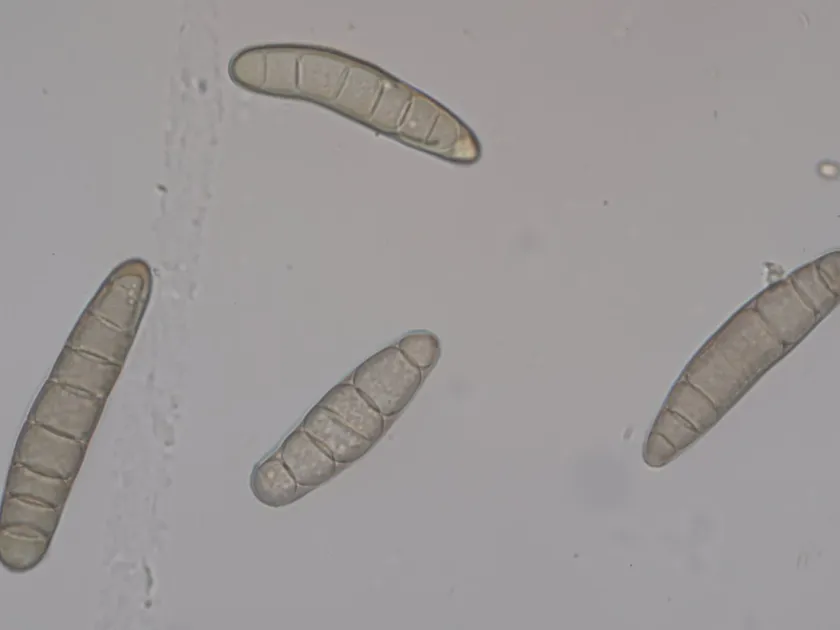
Description
Symptoms
The primary symptom is root rot (often referred to as common root rot), characterized by dark brown lesions on the sub-crown internode and seedling death shortly after emergence.
On leaves, the disease manifests as elliptical or irregular dark brown spots. These lesions often develop a yellow halo, reflecting the translocation of fungal toxins within the leaf tissue.
In cereals, the disease causes "black point" on seeds, which is the darkening of the embryo end. This severely impacts the germination rate and seedling vigor of the future crop.
Under humid conditions, a characteristic olive-black velvety mold appears on the surface of necrotic tissues, representing the fungal reproductive structures (conidiophores).
In onions and garlic, the fungus causes basal rot, where the bulb plate rots, leading to leaf yellowing and the eventual collapse of the plant during storage or in the field.
Pathogen
The causative agent of this disease is the fungus Bipolaris sorokiniana (syn. Helminthosporium sativum, teleomorph Cochliobolus sativus). It is a highly destructive pathogen globally known for causing root rots and leaf spots.
This fungus persists in the soil and on crop debris as mycelium, chlamydospores, and conidia. It can survive as a saprophyte, making it a persistent threat in many agricultural systems.
The host range of this pathogen is remarkably broad, affecting crops such as oats, soybean, hemp, peanuts, coconut palms, and various vegetables including onions, garlic, and celery.
Dissemination primarily occurs via conidia, which are easily dispersed by wind, rain splashes, and insects across fields. Seed-borne transmission is also a major factor in the spread of the pathogen.
Bipolaris sorokiniana produces phytotoxins like helminthosporol, which degrade plant cell tissues, facilitating rapid fungal colonization and causing visible chlorosis and necrosis.
Conditions for development
Disease development is highly favored by warm weather, with optimal temperatures ranging from +22 °C to +28 °C, combined with high humidity (above 85%).
Frequent rainfall during the growing season is crucial for the germination of conidia and their subsequent infection of the plant foliage, leading to secondary cycles of the disease.
Poor agronomic practices, such as deep planting, reduce the speed of seedling emergence, significantly increasing the duration of exposure to soil-borne inoculum.
Nutritional stress, particularly potassium deficiency, combined with environmental stressors like drought or temperature fluctuations, makes plants significantly more susceptible to infection.
Continuous monoculture is the primary factor for the buildup of the pathogen in the soil, as it provides a constant supply of susceptible hosts and increases inoculum density over time.
Why it matters
The most significant impact of Bipolaris sorokiniana is the reduction in crop stand establishment due to pre-emergence and post-emergence damping-off of seedlings.
Leaf infection causes premature defoliation and reduction of photosynthetic area, leading to lower yields and lower kernel weight, especially in grain crops.
Seed quality is severely compromised, not only through weight reduction but also through the presence of fungal spores, which render the harvest unsuitable for seed purposes.
In vegetable crops like onions and garlic, the pathogen causes decay during storage, leading to substantial post-harvest losses and financial strain for producers.
Overall economic losses caused by this fungus can reach 20–30% in highly conducive environments, making it one of the most critical diseases to manage for farmers.
Protection
Effective management begins with the use of high-quality, fungicide-treated seeds to prevent early-season root infection and ensure a uniform crop stand.
Crop rotation is essential to break the pathogen cycle; rotating with non-host crops for at least 3–4 years significantly reduces the inoculum potential in the soil.
Good soil fertility management, particularly maintaining balanced levels of phosphorus and potassium, helps the plant maintain vigor and natural resistance to fungal pathogens.
Foliar application of systemic fungicides (triazoles or strobilurins) is recommended during the vegetative stage if early symptoms of leaf spot are observed.
- Seed disinfection with systemic fungicides.
- Long-term crop rotation to reduce soil inoculum.
- Proper residue management and tillage.
- Optimal planting depth and dates.
- Timely use of foliar fungicides.
In brief
23
Affects crops
Biology
Pathogens and affected parts
Pathogens
Bipolaris sorokiniana· fungus
Helminthosporium papulosum· fungus
Helminthosporium· fungus
Drechslera graminea· fungus
Cochliobolus sativus· fungus
Drechslera tritici-repentis· fungus
Helminthosporium tritici-repentis· fungus
Drechslera wirreganensis· fungus
Drechsler· fungus
Bipolaris incurvata· fungus
Exserohilum turcicum· fungus
Drechslera turcica· fungus
Affected plant parts
whole plantrootseedleafearbulb
Content graph
Affects crops · 23
Reference
Connections · Helminthosporium leaf spot
Most often together:
Marketplace
Products · 2392






Community
Discussion
No discussions yet — be the first.