
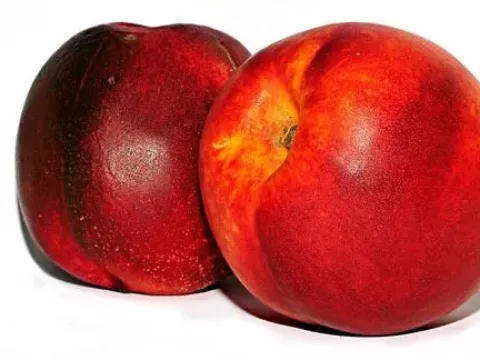
Nectarine
Prunus persica (L.) Batsch var. nucipersica (Suckow) C. K. Schneid.
Nectarine is a smooth-skinned variety of the peach (Prunus persica (L.) Batsch var. nucipersica), belonging to the Rosaceae family. It is a highly demanding crop that thrives in regions with warm, long summers and plenty of direct sunlight to ensure proper fruit maturation.
What the section contains
Nectarine
The ideal soil for nectarines is well-drained, fertile sandy loam or loam with a neutral pH level. Proper aeration of the root system is critical, as waterlogging is the primary cause of sudden death in nectarine orchards during the dormant or early spring season.
Climate requirements involve selecting sites with natural protection from strong, cold winds and frost pockets. In colder climates, selecting hardy cultivars and choosing south-facing slopes are essential strategies for survival and consistent yield production.
Agricultural management requires meticulous pruning techniques to maintain an open-center canopy. This practice maximizes light penetration into the tree, promotes better airflow to reduce fungal diseases, and facilitates easier fruit harvesting.
Fertilization programs must be balanced, focusing on nitrogen in early spring to support foliage growth and phosphorus or potassium later in the season to enhance fruit quality. Irrigation management is also vital, especially during the critical fruit-sizing phase.
Commercial yields for well-maintained nectarine orchards generally range from 10 to 20 metric tons per hectare. High-density planting systems can significantly increase these figures, provided that pruning and thinning are performed correctly.
The most common disease affecting nectarines is peach leaf curl, which requires dormant-season copper-based sprays for effective control. Brown rot is another significant concern that can destroy large portions of the crop during humid harvesting periods.
Pest management focuses on controlling aphids, oriental fruit moths, and various scale insects. Integrated pest management (IPM) practices, such as biological control and the use of pheromone traps, are strongly encouraged to minimize chemical reliance.
Harvesting is labor-intensive because nectarines must be picked at the correct stage of maturity to balance shelf life and flavor. Workers typically perform multiple passes through the orchard to collect fruits only when they have developed their specific varietal color.