
Nanking cherry
Prunus tomentosa Thunb.
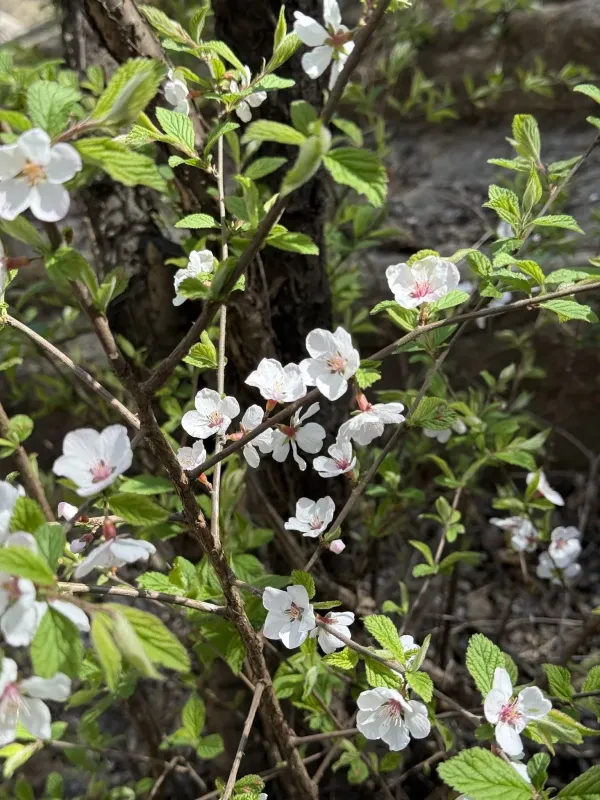
Description
Sowing dates
Nanking cherry (Prunus tomentosa), belonging to the Rosaceae family, is a versatile deciduous shrub widely appreciated for its hardiness and ornamental beauty.
Propagation is typically performed through seeds, which require cold stratification for several months to break dormancy and ensure high germination rates.
Vegetative propagation via softwood cuttings taken in early summer is also common, allowing growers to maintain the specific traits of desirable cultivars.
When planting, it is crucial to select a site with well-draining soil, as the shrub is highly intolerant of waterlogged conditions and root rot.
Early spring or late autumn are the optimal times for transplanting established saplings, ensuring the root system settles before extreme weather conditions.
Growing requirements
This species thrives in full sun exposure, which is necessary to achieve maximum fruit production and maintain a healthy, dense foliage structure.
The ideal soil should be slightly acidic to neutral, rich in organic matter, and possess a light, airy texture to support deep root penetration.
Nanking cherry is exceptionally winter-hardy, surviving temperatures as low as -40°C, making it a reliable choice for cold climate fruit gardening.
The shrub requires consistent, though moderate, moisture during the flowering and fruit-setting stages to ensure proper development of the berries.
Annual maintenance involves pruning to remove deadwood and thinning out crowded branches to facilitate better air circulation throughout the canopy.
Yield
Nanking cherry bushes are known for their early bearing, often producing their first significant harvest within 2 to 3 years after planting.
A single mature shrub can produce between 8 to 15 kilograms of fruit annually, provided that cross-pollination is facilitated by multiple plants.
Due to the shrub's self-infertile nature in many varieties, cross-pollination is essential to ensure a high and consistent yield of sweet-tart berries.
The fruit develops in tight clusters along the stems, ripening uniformly and providing a visual appeal that complements its culinary utility.
Regular harvesting of mature fruit is necessary to prevent over-ripening, which causes the berries to soften rapidly and potentially drop prematurely.
Main diseases and pests
Brown rot (Monilinia) is the most significant disease affecting Nanking cherry, often causing blossoms and twigs to wilt and wither rapidly.
Integrated pest management strategies, such as removing infected tissue and using targeted fungicide applications, are critical for disease control.
Common insect pests include aphids and fruit flies, which can compromise the quality of the harvest and weaken the shrub if left unchecked.
Good garden hygiene, including the prompt removal of fallen fruit and debris, is essential to disrupt the life cycles of common orchard pathogens.
Strategic pruning to ensure the canopy remains open helps minimize humidity, which is a major factor in the proliferation of fungal infections.
Harvesting
The harvest season for Nanking cherry typically occurs during the early summer months, depending on the specific growing region and local temperature.
Berries should be harvested when they reach full color and slight softness; they are very delicate and bruise easily if handled with excessive pressure.
Manual harvesting is the standard method, requiring careful handling to prevent damage to the fruit's tender skin and the plant's delicate stems.
Because these berries have a very short shelf life, they should be processed for jellies, preserves, or fresh consumption within a few days of picking.
Cooling the harvested fruit immediately after picking helps to extend its quality, although it remains unsuitable for long-distance transport.