
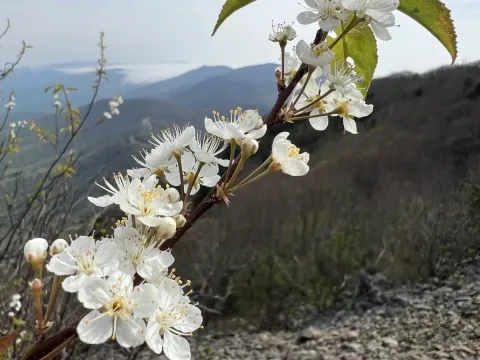
Pin cherry
Prunus pensylvanica
The Pin cherry, scientifically known as Prunus pensylvanica, is a member of the Rosaceae family. Native to North America, this species is well-regarded for its rapid growth rate and resilience in diverse environments, acting as a pioneer species in forest succession.
What the section contains
Pin cherry
The tree thrives in full sun exposure. While it is adaptable to partial shade, optimal growth, floral density, and fruit production occur when the tree receives at least six to eight hours of direct sunlight per day.
Regarding soil requirements, Prunus pensylvanica is quite versatile. It prefers well-drained, sandy, or loamy soils but shows an excellent ability to adapt to rocky sites. It is essential to ensure the soil is not waterlogged to prevent root health issues.
This species is extremely hardy and capable of enduring cold winters, making it suitable for northern regions. It does not require special winter protection, but young saplings should be monitored during the first few years to ensure they establish properly.
Maintenance techniques include structural pruning to remove weak or crossing branches. Maintaining a clear mulch layer around the base can help retain soil moisture and reduce competition from grass, which is particularly beneficial during the first years of growth.
Pin cherry is susceptible to several common pests, including tent caterpillars and aphids, which can defoliate the tree during the peak of the growing season. Early detection and mechanical removal are often the first line of defense.
Fungal diseases, such as black knot or various leaf spots, are significant threats. Regular inspection of the branches and removal of infected wood are critical to preventing the spread of these fungi through the canopy.
Effective management involves ensuring good air circulation within the tree's canopy. Proper pruning prevents high humidity levels that create ideal conditions for fungal pathogens to colonize the foliage and tender bark.
Using appropriate dormant oils or insecticides can control overwintering pest populations. However, chemical applications should be timed carefully to avoid harming beneficial pollinators that visit the flowers in spring.
Soil health plays a pivotal role in preventing disease. By avoiding excessive nitrogen fertilization, which leads to succulent growth attractive to pests, one can maintain a stronger, more resistant tree structure over its entire lifespan.