
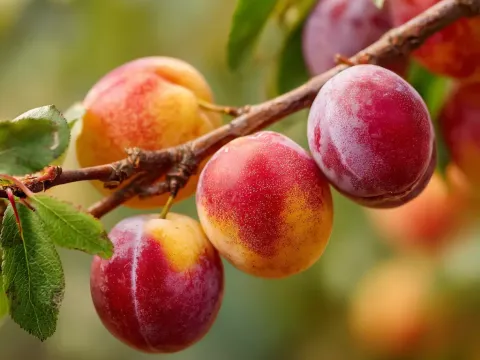
Plum hybrids
Prunus hybrids
Plum hybrids (Prunus hybrids) belong to the Rosaceae family and are a result of crossing various stone fruit species, including plums, apricots, cherries, and almonds. These hybrids combine the desirable traits of their parent species, such as improved fruit size, flavor, and resistance to environmental stress.
What the section contains
Plum hybrids
Success in cultivating these hybrids depends heavily on site selection. These trees thrive in well-drained, fertile soil with a neutral to slightly acidic pH level. They require a sunny location that provides protection from harsh prevailing winds to prevent damage to blossoms and developing fruit.
Cultural practices include consistent irrigation during dry spells and a balanced fertilization program tailored to the growth phase. Pruning is essential for maintaining tree structure, encouraging air circulation, and ensuring that sunlight reaches the inner parts of the canopy for optimal fruit development.
Climate requirements vary significantly depending on the specific parent lineage of the hybrid. Some cultivars are bred specifically for colder climates, offering enhanced frost resistance, while others are developed for warmer regions with specific chilling hour requirements to ensure proper fruit set.
Economically, plum hybrids are highly valued in the commercial fruit market due to their unique flavor profiles and excellent storage life. They are widely used for fresh consumption, culinary applications, and industrial processing, providing a high-value product for modern orchards.
Common diseases affecting plum hybrids include brown rot (Monilinia spp.) and bacterial leaf spot. These pathogens can rapidly diminish crop quality, making timely application of fungicides and proper sanitation of the orchard floor essential for management.
Insects like the plum curculio and various aphid species pose a continuous threat to tree health and yield. Integrated Pest Management (IPM) strategies, involving monitoring and targeted pesticide application, are necessary to keep pest populations below the economic injury level.
Sanitation plays a crucial role in disease control. Collecting and destroying fallen fruit and pruning out dead or infected wood helps to reduce inoculum levels for the following season, significantly decreasing the pressure from fungal diseases.
Adequate canopy management not only improves fruit size but also mitigates disease risk. By thinning fruit and pruning, growers reduce the humidity trapped within the leaves, creating an environment less conducive to fungal spore germination.
- Monitoring for signs of pest activity during bloom.
- Using pheromone traps for early detection of borers.
- Applying dormant sprays to reduce overwintering populations.