
Munson plum
Prunus munsoniana W. Wight & Hedrick
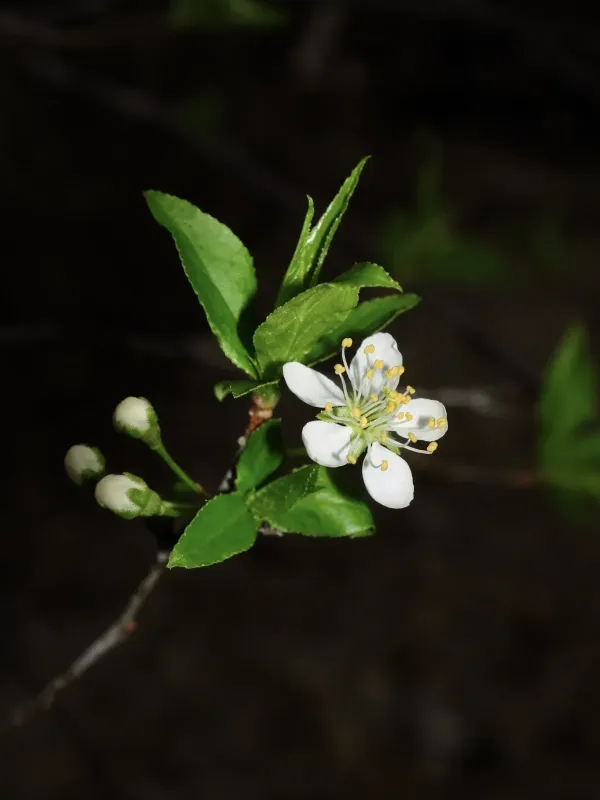
Description
Growing requirements
The Munson plum (Prunus munsoniana) is a deciduous tree belonging to the Rosaceae family, native to the Mississippi River valley in North America. In its natural habitat, it thrives along stream banks, forest margins, and open areas with sufficient moisture and sunlight.
Botanically, this species is noted for its thin, smooth bark and graceful, slender branches. The foliage consists of narrow, lanceolate leaves with serrated margins, which contribute to its ornamental appeal throughout the growing season.
Cultivation requires well-drained loamy soils with a neutral or slightly acidic pH level. While the tree is adaptable to various environments, it performs best when protected from extreme, drying winds which can damage both the foliage and the developing flower buds.
In terms of agricultural significance, the Munson plum is highly valued as a rootstock for various stone fruit cultivars. Its inherent hardiness and ability to thrive in diverse soil conditions make it a preferred choice for breeders aiming to enhance disease resistance in domestic plum varieties.
Proper spacing is essential when planting this species to ensure good air circulation, which is vital for preventing humidity-related issues in the canopy. The tree can reach heights of up to 7 meters, necessitating adequate room for mature growth and canopy development.
Main diseases and pests
Like many members of the Prunus genus, the Munson plum is susceptible to fungal diseases such as brown rot (Monilinia) and shot-hole fungus. These pathogens thrive in damp conditions, requiring regular monitoring and preventative fungicide applications during wet springs.
Pests like the plum curculio and aphids are common threats that can impact fruit quality and tree vigor. Implementing integrated pest management strategies, including the use of sticky traps and beneficial insect release, can significantly reduce the need for heavy chemical treatments.
Sanitation is a cornerstone of effective disease control. Removing and destroying fallen leaves and mummified fruits at the end of the season prevents the overwintering of pathogens that could infect the tree in the following year.
Pruning is necessary not only for shaping the tree but also for removing dead or diseased wood. This practice improves light penetration and airflow, creating a less hospitable environment for fungal and bacterial infections to establish themselves.
Maintaining tree health through adequate irrigation and balanced fertilization provides the plant with the necessary resources to boost its natural immunity. A well-nourished tree is significantly more resilient to the stresses caused by seasonal pest pressure.
Harvesting
The fruits of the Munson plum typically ripen in late summer to early autumn, turning a bright, attractive red color. They are small and round, featuring a juicy flesh with a tart, refreshing flavor that is highly desirable for culinary processing.
Harvesting is usually done by hand in several pickings to ensure the fruit is collected at its peak maturity. Because the fruit can be delicate, gentle handling is required to prevent bruising and extend the shelf life of the harvest.
Post-harvest, the fruits are ideal for making jams, jellies, and preserves due to their natural pectin content. They also serve as an excellent base for artisanal juices and flavorings in commercial food production.
For optimal quality, fruit should be processed or refrigerated shortly after harvest. If long-term storage is intended, controlled temperature environments are necessary to maintain the integrity of the fruit's texture and flavor profile.
After the harvest season is complete, the trees enter a recovery phase. Applying a late-season fertilizer and ensuring sufficient water before the first ground freeze helps the tree store energy, ensuring robust health and productivity for the upcoming growing season.