
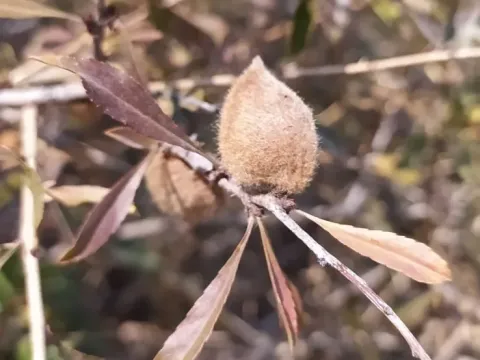
Petunnikov's almond
Prunus petunnikowii
Petunnikov's almond (Prunus petunnikowii) is a low-growing deciduous shrub belonging to the Rosaceae family. Native to the mountainous regions of Central Asia, specifically the Tien Shan and Pamir-Alai ranges, this species is highly adapted to arid, high-altitude environments.
What the section contains
Petunnikov's almond
Botanically, the shrub typically reaches a height of 1 to 1.5 meters, featuring a dense, spreading habit. Its leaves are lanceolate with serrated margins, while the flowers, which appear in early spring before the foliage, are a striking pink color.
This species thrives in well-drained, rocky, or limestone soils. It is exceptionally undemanding regarding soil fertility, but it requires full sun exposure to flourish and maintain its dense form.
The culture is prized for its extreme drought and frost tolerance, making it an excellent choice for xeriscaping or stabilizing slopes in regions with harsh continental climates.
In agricultural and horticultural practices, Petunnikov's almond is primarily used for its aesthetic value in landscape design or as a hardy rootstock for grafting improved almond varieties in dry, challenging environments.
The health of the plant is primarily threatened by fungal diseases that emerge under conditions of high humidity or poor soil drainage.
- Monilia (blossom blight) which affects flowers and young shoots during cool, wet springs.
- Shot-hole disease (Stigmina carpophila) leading to leaf spots and early defoliation.
- Aphids, which can cause significant stress by feeding on new growth.
- Various fruit-boring insects that may affect the development of the small stone fruits.
Effective management includes maintaining proper spacing between plants to ensure adequate air circulation and prevent the buildup of fungal spores.
Sanitary pruning is essential; removing dead or diseased wood helps keep the shrub healthy and limits the overwintering sites for pathogens and pests.
Preventative treatments with copper-based fungicides during the dormant season are recommended to protect the plant from early spring infections.