
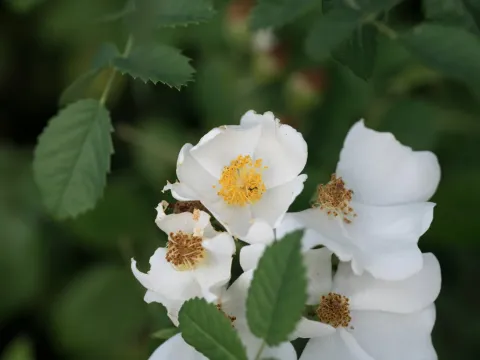
Phoenician rose
Rosa phoenicia
The Phoenician rose (Rosa phoenicia) is a distinct species belonging to the Rosaceae family. Native to the Eastern Mediterranean region, this shrub is naturally adapted to rugged landscapes and diverse terrain within the Levant and surrounding areas.
What the section contains
Phoenician rose
Botanically, this plant is characterized by its scrambling or climbing stems that can grow quite long, often supported by sharp, recurved prickles. It produces abundant white to light pink, fragrant flowers that typically bloom in terminal corymbs.
The climate requirements for this species include plenty of direct sunlight and a mild winter, as it is native to regions with Mediterranean weather patterns. It thrives in positions where it can receive at least six to eight hours of direct sun daily.
Soil requirements focus on fertility and drainage; the plant prefers deep, loamy soils that can retain enough moisture for growth without becoming waterlogged. A neutral soil pH is generally considered ideal for optimal nutrient uptake.
Cultivation practices involve regular pruning to manage the vigorous growth and to encourage healthy air circulation within the canopy. Consistent watering during the establishment phase is crucial, while mature plants demonstrate moderate drought tolerance.
Like many species in the genus Rosa, the Phoenician rose is susceptible to common pests such as aphids, which colonize young buds and leaves during the spring growth spurt.
Spider mites are another notable threat, particularly during hot and dry summer conditions, often leading to chlorosis and potential leaf drop if left unchecked.
Fungal diseases are a significant concern, with powdery mildew being the most prevalent, especially in environments with poor air circulation or high humidity levels.
Black spot is a chronic issue that manifests as dark lesions on the foliage; it is best managed through sanitation, such as removing fallen leaves where spores overwinter.
Integrated pest management, combining physical removal of infested shoots with appropriate biological or chemical treatments, remains the standard approach for maintaining plant vigor.